
Stitched in history: How Topps designed a set 75 years in the making

Not only does Topps art director Adam Schwartz vividly remember receiving his first jersey as a kid, he knows exactly where it is. The black Mets Jose Reyes model has a permanent spot in his closet, long outgrown but still a cherished keepsake from his childhood.
“It doesn't fit me anymore, but I can't part ways with it,” he said. “It just made such an impact.”
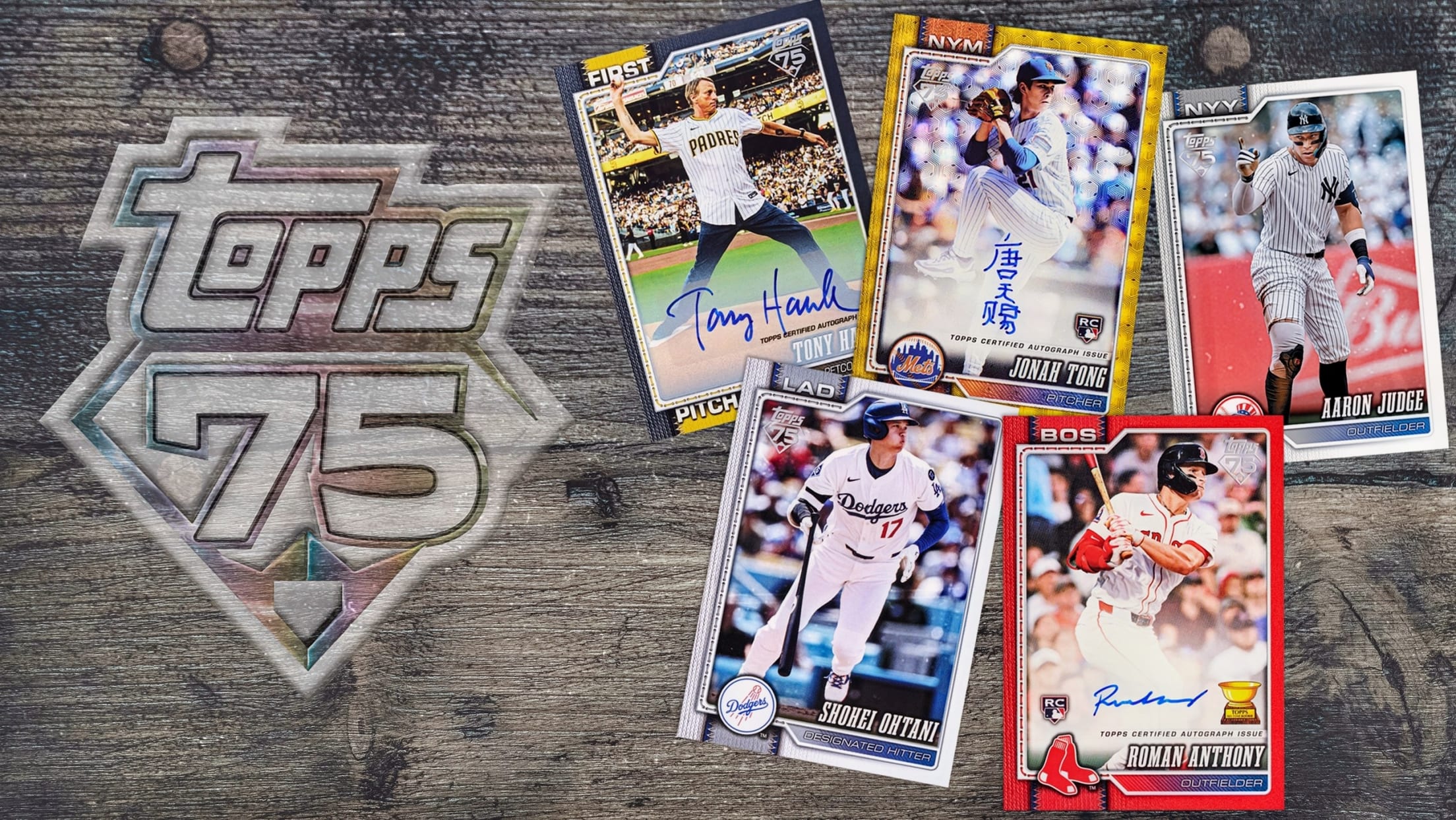
Twenty years later, that impact is still being felt. Following a spirited competition – more on that later – Schwartz’s design was selected as the base card for 2026 Topps Baseball Series 1, which hits stores today, and it will be featured on sets for other sports as well. And it was that very first jersey, a gift from his parents, that inspired his winning idea.
“Honestly, it’s a huge honor. I was so excited,” Schwartz said. “I told my parents -- they’re not collectors, but they were really excited too.
“My dad was jumping up and down. He was joking with me like, ‘Is there going to be bubble gum in the pack?’”
No dice on the gum -- the lovable, inscrutable pink rectangle fell by the wayside 35 years ago -- but the mystique of the hobby’s most iconic set has stood the test of time.
Topps’ flagship collection annually drops right around the date when pitchers and catchers report, signaling that a new season, with all the hope and renewal it embodies, is right around the corner. Countless fans spanning the generations, present company included, have celebrated the dawn of spring by ripping their first pack, hoping to see Mickey Mantle, Ken Griffey Jr. or Shohei Ohtani peering back at them.
Factor in that Topps Baseball happens to be celebrating its 75th anniversary this year, and suffice to say, there was a little added pressure to hit it out of the park.
“One thing I always tell our designers is you should be able to look at any of these designs 50 years from now, 75 years from now, a hundred years from now, and know exactly what year that card is from,” said Clay Luraschi, Senior VP of Product at Topps. “I believe that this card, because it is very unique and it's very different, you will be able to look at it years from now and say, ‘OK, that’s the one they used in the 75th anniversary.”
Schwartz traveled quite a path to such a coveted assignment. Hired out of college a decade ago by Topps, he’s had a hand in all sorts of projects, from Bowman Baseball to Formula 1 Racing, Star Wars to Stranger Things. But getting a shot at the flagship set was a bucket list item from his first day on the job.
Something of a Series 1 historian, Schwartz endeavored to infuse an essential part of the national pastime in his prototype, like the 1987 set did with its beloved baseball-bat woodgrain.
“I'm trying to think about the game’s identity, I was thinking about the dirt in the infield,” Schwartz said. “Because I wanted something unique to baseball, I was thinking about the grass, the bases, so many different things.”
Ultimately, he kept coming back to what it felt like to run his fingers over the stitching on that first Mets jersey all those years ago. After examining the various City Connect models on Fanatics’ web site, Schwartz integrated the styles and textures of modern baseball uniforms into his design, matching the colors to the players’ teams.
Schwartz had a good feeling about it, but there was still the matter of getting through Topps’ exhaustive selection process, which makes Dancing with the Stars look like a walk in the park.
Over the course of 15 months, a dozen talented artists anonymously presented 25 prospective designs to six judges. After much deliberation, the conclave gradually whittled the field down to the top 5, and physical versions were printed so they could get a true feel for what it would be like to pull each card from a pack. (How cool is that?)
“There’s a ton of different designs. They’re all great,” said Luraschi, one of the judges. “The ones that come in second and third place, they get repurposed into other products, so we get a lot out of this process.”
Right from the jump, Schwartz’s submission stood apart from the pack. His jersey-inspired card had reached the finals in 2025, but his idea was not selected because it was a touch too avant-garde. Schwartz dialed back certain elements for ’26, found the sweet spot between an innovative concept and the traditional clean border of the flagship set, and the rest is trading card history.
“The company and the brand has a massive legacy and it's something I don't take lightly, so this design had to be an incredible one because it represents so much,” Luraschi said. “We're very happy with it. Adam did a great job.”
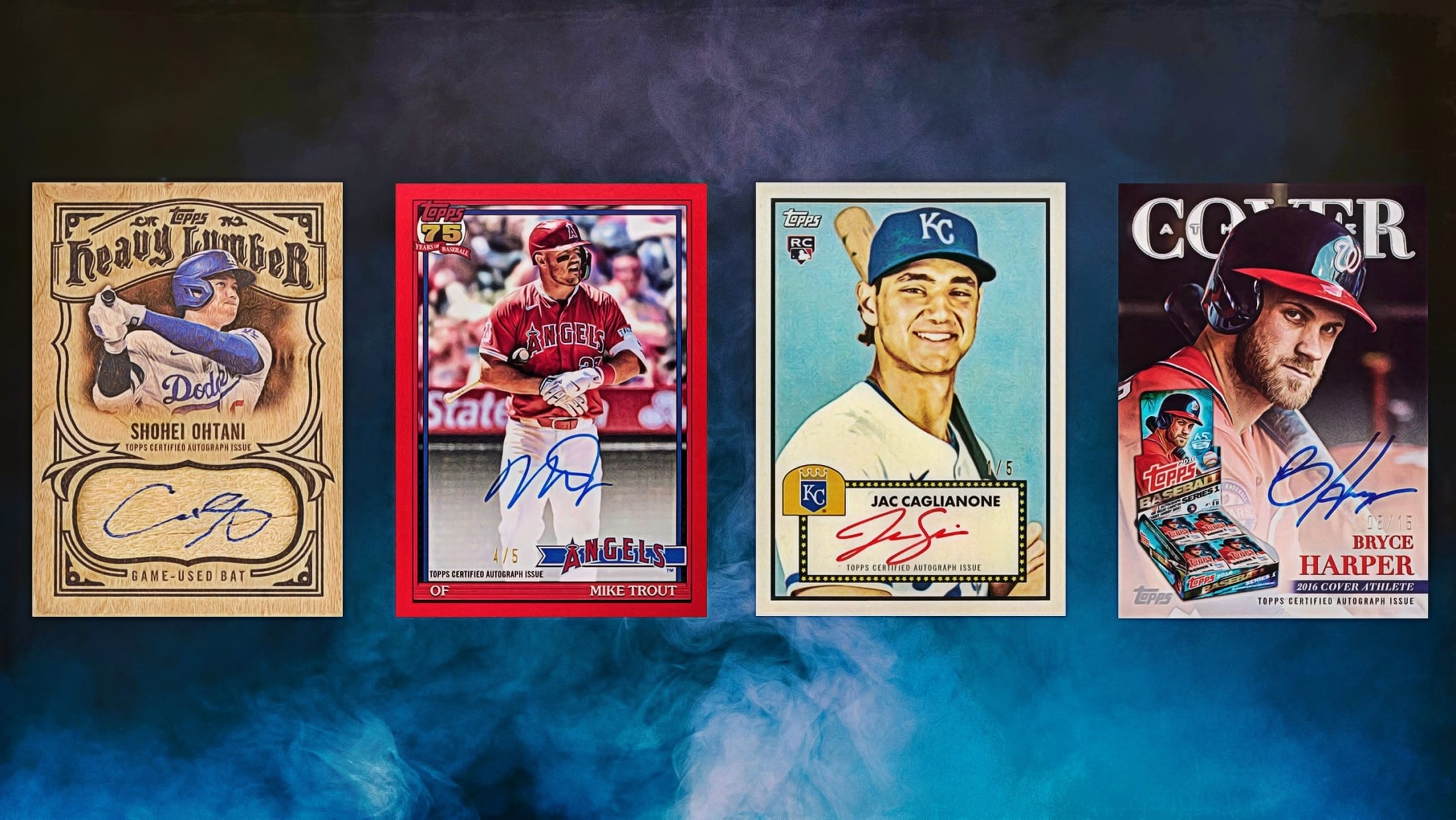
There is, of course, more to 2026 Series 1 than just the 350-card base set. There are variants calling back to 1952 (first set) and 1991 (40th anniversary), plus modern favorites like the Aces and Kings inserts and the new Heavy Lumber subset. The Cover Athlete Autograph cards honor 10 recent players who were featured on a flagship set box.
And perhaps most intriguing of all, with the "Iconic Topps Buybacks" initiative, the top 75 cards in the history of the brand will have redemption cards randomly inserted into packs. (That includes the vaunted '52 Mickey Mantle.)
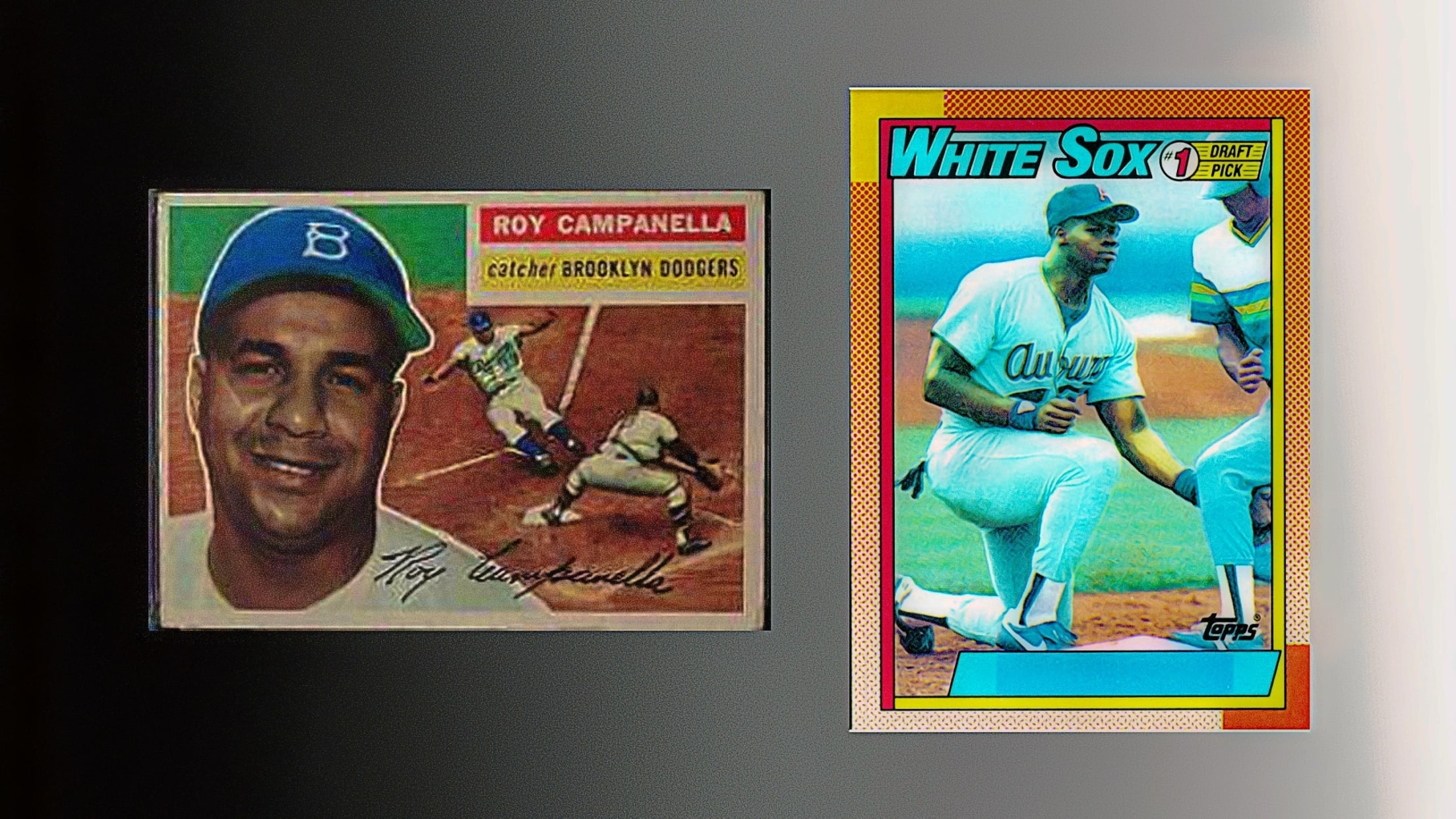
That said, while Topps perennially tells its story through its cards, perhaps the best part is that every collector has their own story to tell. Luraschi’s labor of love began decades ago, when his mom gifted him a 1956 Roy Campanella card that he called a “work of art.” For Schwartz, the vivid colors of the 1990 set helped inform his palette all these years later, along with that fateful Mets jersey.
Beginning today, a whole new generation of collectors will write the first chapter of their story – a tradition that hopefully continues for another 75 years and beyond.
“I'm just humbled and honored to be able to help carry on Topps’ legacy and obviously be cognizant of what has happened historically, but also help usher in the next generation of the brand and the new collectors,” Luraschi said.
“To me, this design, it's recognizable, it's unique. It's obviously being presented during a very important milestone in the company's timeline. So it's just an incredible representation of not only what we've done, but what we're going to do.”