

Chicago Cubs Legends: Where to Find Their Legacy at Wrigley Field
Wrigley Field is more than a place to watch baseball. The Friendly Confines is a living museum of Chicago Cubs history, where the greatest players and broadcasters are honored through statues, retired numbers, and a dedicated Cubs Hall of Fame. If you're visiting the ballpark and want to find every piece of Cubs legend history, here's exactly where to look.
Statue Row at Gallagher Way
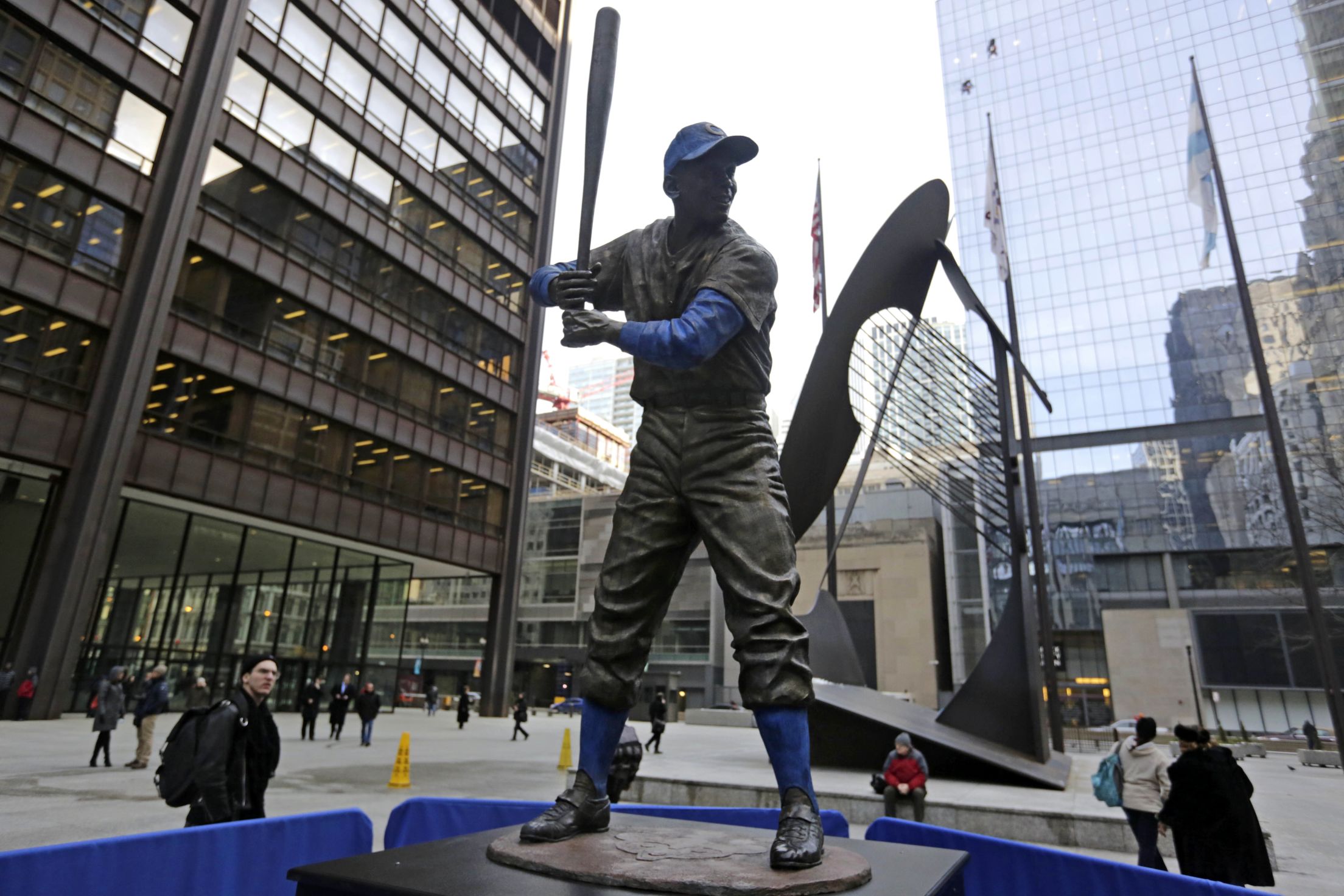
Gallagher Way, the plaza area just outside the ballpark, is home to five statues of Cubs icons. A sixth statue honoring beloved broadcaster Harry Caray stands near the Budweiser Bleacher Gate.
The Five Legends on the North Side of Gallagher Way
Statue Row sits on the north side of Gallagher Way, just outside the Gallagher Way Gate. Each bronze statue captures a signature moment or pose:
- Ernie Banks ("Mr. Cub"): Depicts his signature stance and smile. Banks played shortstop and first base from 1953 to 1971 and popularized the phrase "The Friendly Confines."
- Ron Santo: Positioned in his third-base fielding stance. Santo played third base from 1960 to 1973 and later served as a Cubs broadcaster for 21 seasons.
- Billy Williams ("Sweet Swingin'"): Shows him finishing his smooth left-handed swing. Williams played outfield and first base from 1959 to 1974.
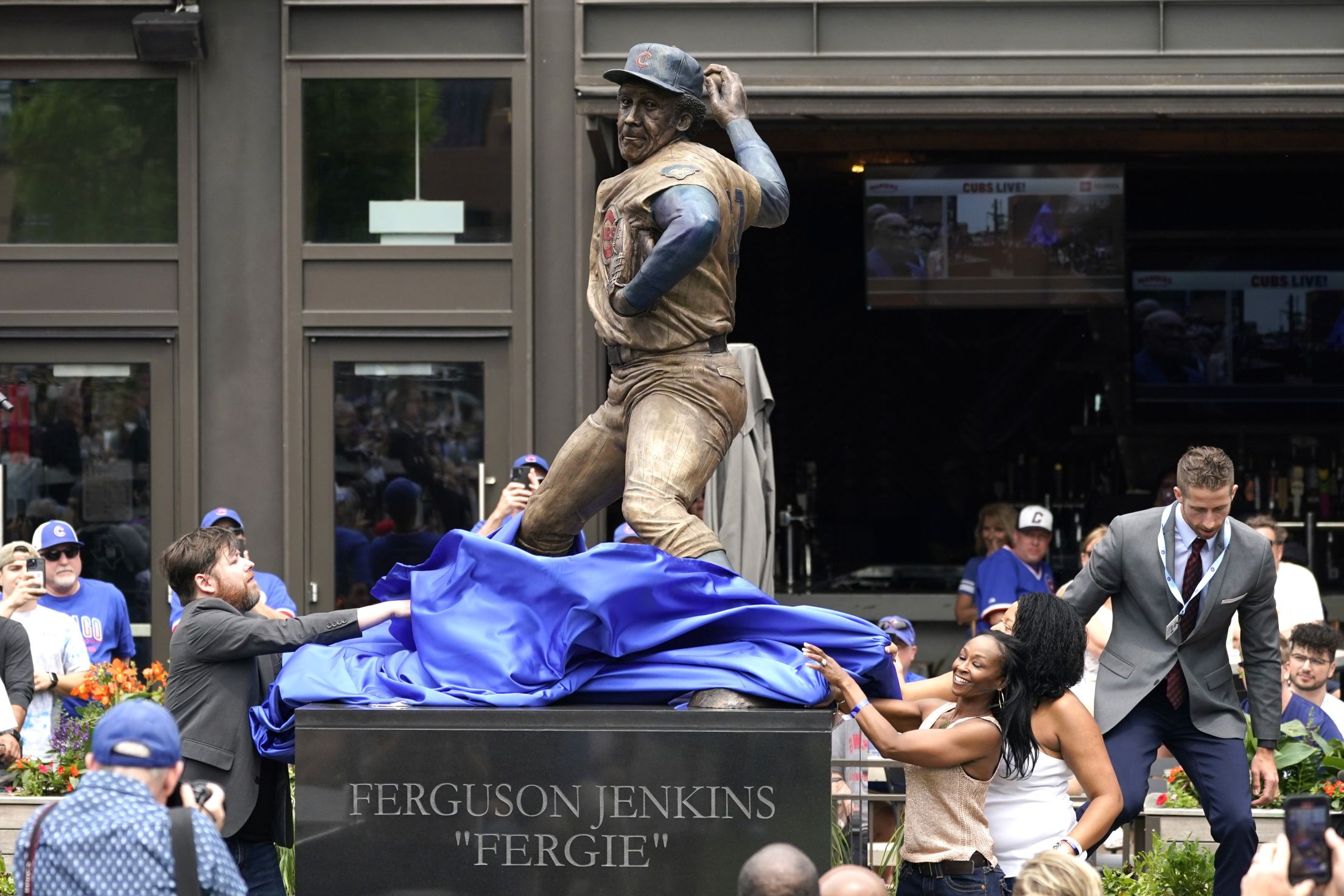
- Fergie Jenkins: Captures him mid-pitching delivery. Jenkins played for the Cubs from 1966 to 1973 and again in 1982 to 1983.
- Ryne Sandberg ("Ryno"): Unveiled in 2024, the newest statue includes his signature flip-up sunglasses and depicts him in a defensive stance. Sandberg played second base from 1982 to 1994 and 1996 to 1997.
The Harry Caray Statue
The statue of legendary broadcaster Harry Caray stands near the corner of Sheffield and Waveland avenues, by the entrance to the Budweiser Bleachers. Caray called Cubs games from 1982 to 1997 and made the seventh-inning stretch rendition of "Take Me Out to the Ball Game" a Wrigley Field tradition that continues to this day with celebrity guest conductors.
The Chicago Cubs Hall of Fame
Located within the left-field Budweiser Bleacher concourse, the Cubs Hall of Fame was unveiled in 2021 and now includes over 60 plaques.
Who Gets a Plaque
The Cubs Hall of Fame honors individuals who dedicated significant time to Cubs baseball, both on and off the field. Members include:
- Baseball legends and National Baseball Hall of Famers like Ernie Banks, Billy Williams, Ron Santo, Fergie Jenkins, Ryne Sandberg, Andre Dawson, and Greg Maddux
- Beloved broadcasters including Jack Brickhouse and Harry Caray
- Team owners and front office executives
- The 2025 class added Sammy Sosa and Derrek Lee
- The 2026 class adds Jon Lester, Jody Davis, and broadcaster Vince Lloyd, who receives the Cubs' new Lifetime Achievement Award
The plaques are accessible during home games and on select Wrigley Field Tours. Walking through the concourse and reading the stories behind each plaque is one of the more underrated experiences at the ballpark.
Retired Numbers on the Foul Poles
The Cubs fly retired uniform numbers as pinstriped flags atop both foul poles, visible from throughout the seating bowl and Budweiser Bleachers.
Left Field Foul Pole
- No. 14, Ernie Banks
- No. 10, Ron Santo
- No. 31, Fergie Jenkins
Right Field Foul Pole
- No. 26, Billy Williams
- No. 23, Ryne Sandberg
- No. 31, Greg Maddux
- No. 42, Jackie Robinson (retired league-wide)
In honor of Hall of Fame broadcaster Jack Brickhouse, his famous phrase "Hey Hey" is affixed to both foul poles.
Historic Features That Honor the Past
Beyond the statues and the Hall, several features at Wrigley Field connect fans to the history of the game.
The Hand-Turned Scoreboard
The 27-foot center-field scoreboard was installed in 1937 and remains hand-operated to this day. Score changes are updated manually from inside the scoreboard, and the clock at the top has never lost time. No batted ball has ever hit the scoreboard, though two baseballs have come very close.
The Ivy-Covered Outfield Walls
Planted in September 1937 by Bill Veeck, the outfield ivy is one of Wrigley Field's most recognizable features. The vines turn green through the summer and shift to red during the postseason, creating a backdrop unlike any other in Major League Baseball.
The W Flag Tradition
After every Cubs home game, a flag is raised atop the scoreboard. A white flag with a blue "W" signals a victory. A blue flag with a white "L" denotes a loss. The tradition dates back to the 1937 scoreboard construction and was originally designed so passengers on passing "L" trains could see the result.
Walk Where Legends Played
The best way to experience Cubs legend history is to see the ballpark in person. Book a Wrigley Field Tour to walk the field, visit Statue Row, and explore the Cubs Hall of Fame. Or check out the Cubs gift guide for memorabilia celebrating your favorite all-time Cubs players.
Frequently Asked Questions
Where are the Cubs statues located at Wrigley Field?
The five player statues are at Statue Row, on the north side of Gallagher Way near the Gallagher Way Gate. The Harry Caray statue is near the Budweiser Bleacher Gate at Sheffield and Waveland avenues.
How many members are in the Chicago Cubs Hall of Fame?
The Cubs Hall of Fame currently includes 68 plaques honoring players, managers, broadcasters, and executives, with the 2026 class bringing the latest additions.
Which Cubs numbers are retired?
No. 10 (Santo), No. 14 (Banks), No. 23 (Sandberg), No. 26 (Williams), No. 31 (Jenkins and Maddux), and No. 42 (Robinson, league-wide).
Can you see the Cubs Hall of Fame on a tour?
The Cubs Hall of Fame is located in the left-field Budweiser Bleacher concourse. Access is available on gamedays and may be included on select tours depending on availability.
Who was the most recent Cubs statue added?
Ryne Sandberg's statue was unveiled on June 23, 2024, making it the newest addition to Statue Row at Gallagher Way.
Is the Wrigley Field scoreboard really operated by hand?
Yes. The numbers on the center-field scoreboard are changed manually from inside the structure, a tradition that has continued since 1937.