

Cubs Hall of Famers: Complete Guide to Legends
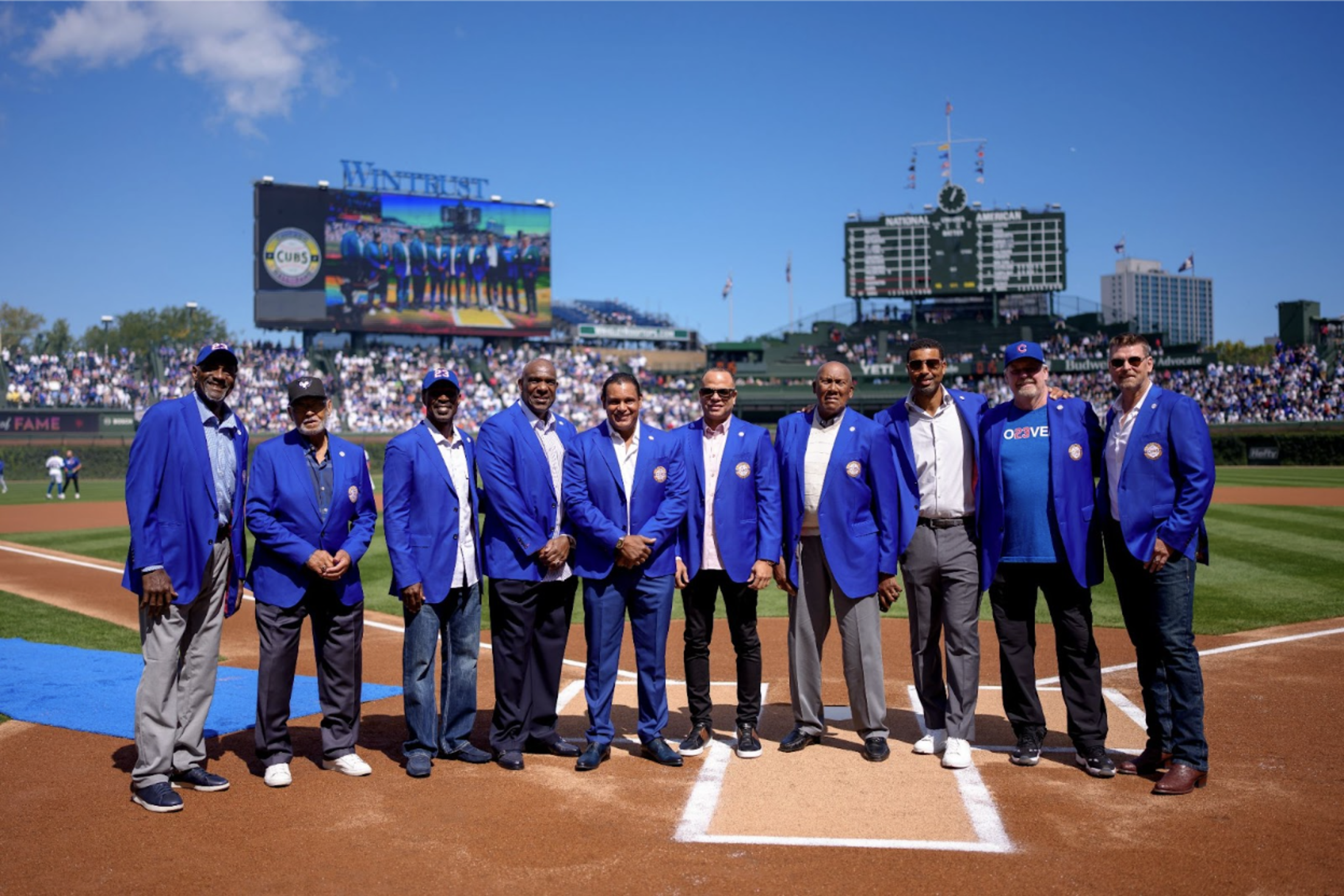
The Chicago Cubs Hall of Fame celebrates baseball royalty. Since 2021, this hallowed collection has honored the players, managers, and broadcasters who transformed the Friendly Confines into one of baseball's most sacred grounds. Walk through the Budweiser Bleacher concourse at Wrigley Field and you'll see bronze plaques immortalizing 150 years of excellence, from the 1876 champions through the drought-breaking 2016 World Series championship squad.
What separates the Cubs Hall of Fame from Cooperstown? Simple. The key point is franchise impact over career totals. Ernie Banks' 512 home runs all came in a Cubs uniform. Ryne Sandberg never wore another jersey during his 15 Major League seasons. Ron Santo's 337 homers and five Gold Glove Awards defined Cubs baseball for 14 years. That loyalty, that commitment to the North Side, that's what earns immortality here.
Legendary Position Players in the Cubs Hall of Fame
The Greatest Cubs of All Time
Ernie Banks stands alone. "Mr. Cub" redefined what a shortstop could do at the plate, launching 512 home runs from 1953 to 1971 while radiating optimism through losing seasons. Banks won back-to-back MVP awards in 1958 and 1959, the first National League player to accomplish that feat. His signature greeting, "Let's play two," captured everything beautiful about loving baseball even when winning proves elusive. Banks never reached the postseason, yet his number 14 flies from the left-field foul pole, forever watching over the ballpark he called home.
Ryne Sandberg brought championship baseball back to Chicago. The 1984 MVP electrified Wrigley Field with power, speed, and defensive wizardry at second base. Sandberg's famous June game against the Cardinals, where he homered twice off Hall of Famer Bruce Sutter to tie the game in the ninth and 10th innings, announced his arrival as a superstar. Nine Gold Glove Awards and 277 home runs later, Sandberg retired as the greatest second baseman in franchise history. His number 23 joined Banks' 14 in the Wrigley Field sky.
Ron Santo gave everything to Cubs baseball. The third baseman hit 337 home runs and drove in 1,290 runs from 1960 to 1973, all while managing juvenile diabetes that nearly cost him his career. Santo's heel-clicking celebrations after victories became legendary. Five Gold Glove Awards proved his defensive mastery. After retiring, Santo spent two decades as a beloved Cubs radio broadcaster, his passion for the team never wavering through 108 years without a championship. His number 10 retirement ceremony in 2003 brought tears to Wrigley Field.
The Hitting Legends
Billy Williams owns the sweetest left-handed swing in Cubs history. "Sweet Swingin' Billy from Whistler" batted .290 with 392 home runs from 1959 to 1974. Williams' 1,117-game playing streak set National League records and earned him the nickname "Iron Man." The 1961 Rookie of the Year never won a championship, but his consistent excellence made him a six-time All-Star. Williams' number 26 waves from the right-field foul pole, partnering with Banks on opposite sides of the Friendly Confines.
Sammy Sosa's power surge changed baseball. From 1992 to 2004, Sosa launched 545 home runs in a Cubs uniform, surpassing Banks as the franchise's all-time leader. The summer of 1998 captivated America as Sosa and Mark McGwire chased Roger Maris' single-season record. Sosa's 66 homers earned the MVP, though McGwire hit 70. Sosa became the only player to hit 60-plus home runs three times (1998, 1999, 2001). His 2025 Hall of Fame induction marked reconciliation between the franchise and its most prolific slugger.
Hack Wilson's 1930 season remains untouchable. The 5-foot-6 powerhouse hit 56 home runs and drove in 191, a Major League record that still stands 95 years later. Wilson batted .356 that year with a .723 slugging percentage. The barrel-chested outfielder from the Lakeview neighborhood gave Cubs fans one of baseball's greatest offensive performances before personal demons shortened his career.
Cubs Hall of Fame Pitching Aces
Dominant Starters Who Defined Eras
Fergie Jenkins stands as the greatest pitcher in Cubs history. The right-hander won 167 games from 1966 to 1973, posting six consecutive 20-win seasons. Jenkins struck out 2,038 batters while walking just 499, demonstrating pinpoint control. The 1971 Cy Young Award winner threw complete games like other pitchers throw bullpen sessions. Jenkins' number 31 honors both him and fellow Cubs Hall of Famer Greg Maddux, who won the 1992 Cy Young before his legendary Atlanta run.
Mordecai "Three Finger" Brown turned childhood tragedy into pitching dominance. The farm accident that mangled his right hand created unhittable movement on his curveball. Brown posted a 1.80 ERA from 1904 to 1912, winning 188 games and anchoring championship teams in 1907 and 1908. The National League batters had no answer for Brown's devastating breaking ball.
Kerry Wood's 20-strikeout game on May 6, 1998, remains etched in baseball history. The 20-year-old rookie tied Roger Clemens' single-game record, allowing just one hit against the Houston Astros. Wood's explosive fastball and devastating slider made him baseball's most exciting young pitcher. Injuries derailed his career, but Wood's Cubs legacy includes 1,466 strikeouts and a beloved 2016 World Series championship as a special assistant.
Relief Pitchers Who Shut the Door
Lee Smith intimidated batters. The 6-foot-6 closer saved 180 games from 1980 to 1987, establishing himself as baseball's most dominant reliever. Smith's 95-mph fastball and hard slider made him nearly unhittable in the ninth inning. Bruce Sutter revolutionized closing with his split-finger fastball, saving 133 games and winning the 1979 Cy Young Award. Sutter's innovation changed how pitchers approached relief work.
Managers and Broadcasters in the Cubs Hall of Fame
The Managers Who Built Dynasties
Frank Chance managed the Cubs to four pennants from 1905 to 1912, including the legendary 1906 team that won 116 games. Chance's Cubs captured World Series championships in 1907 and 1908, establishing the franchise's early dominance. The first baseman and manager formed two-thirds of baseball's most famous double-play combination with Joe Tinker and Johnny Evers. Charlie Grimm's three managerial stints produced pennants in 1932, 1935, and 1945, making him one of the franchise's winningest skippers.
The Voices of Cubs Baseball
Harry Caray transformed Cubs baseball into appointment television. From 1982 to 1997, Caray's seventh-inning stretch renditions of "Take Me Out to the Ball Game" became a Wrigley Field tradition. His signature "Holy Cow!" call and oversized glasses made him a cultural icon. Jack Brickhouse preceded Caray from 1948 to 1981, his "Hey-Hey!" home run call echoing through generations. Pat Hughes continues broadcasting excellence today, calling the 2016 World Series championship on radio.
Cubs Hall of Fame Induction Classes
The 2021 Inaugural Class
The Cubs established their Hall of Fame in 2021 with more than 50 inductees spanning franchise history. Banks, Sandberg, Santo, Williams, and Jenkins headlined the class. Cap Anson, the 19th-century first baseman who played from 1876 to 1897, earned recognition alongside Tinker-to-Evers-to-Chance. Gabby Hartnett's "Homer in the Gloamin'" secured his legend. The Wrigley family's ownership shaped Cubs culture for generations.
Recent Inductees (2022-2025)
Buck O’Neil joined in 2022, honoring his role as the Cubs’ first Black coach beginning in 1962, alongside José Cardenal and broadcaster Pat Hughes. Shawon Dunston (2023) and Mark Grace (2023) celebrated excellent Cubs careers. Aramis Ramírez and Kerry Wood were inducted in 2024. The 2025 class welcomed Derrek Lee and Sammy Sosa, marking Sosa’s long-awaited return.
Comparing Cubs Hall of Fame to Cooperstown
The National Baseball Hall of Fame evaluates entire careers across all teams. The Cubs Hall of Fame focuses exclusively on North Side contributions. Ryne Sandberg earned both honors because all 15 seasons came in a Cubs uniform. Andre Dawson played 11 years in Montreal before his 1987 MVP season in Chicago. Dawson’s Cubs Hall of Fame plaque recognizes his Chicago impact, while his Cooperstown plaque reflects his full career, including both his Montreal Expos and Chicago Cubs tenure.
Conversely, some Cooperstown inductees with brief Cubs stops don't appear in the Cubs Hall of Fame. The key point is meaningful franchise contribution, not just Hall of Fame credentials. Players must have shaped Cubs history to earn recognition in the Budweiser Bleacher concourse.
Cubs Hall of Fame Awards and Achievements
MVP Winners
Eight Cubs Hall of Famers won MVP awards. Banks captured consecutive honors in 1958 and 1959. Sandberg's 1984 MVP sparked the Cubs' first postseason appearance since 1945. Sosa's 1998 MVP came during his 66-home run campaign. Andre Dawson won despite the Cubs' last-place finish in 1987, testament to his individual brilliance.
Cy Young Award Winners
Fergie Jenkins (1971), Greg Maddux (1992), Bruce Sutter (1979), and Rick Sutcliffe (1984) earned Cy Young Awards in Cubs uniforms. Sutcliffe went 16-1 after his mid-season trade in 1984, one of baseball's greatest second-half performances.
Gold Glove Excellence
Ron Santo's five consecutive Gold Glove Awards (1964-1968) established defensive standards at third base. Ryne Sandberg won nine Gold Gloves, showcasing remarkable range and double-play execution. Mark Grace collected four Gold Gloves at first base with smooth fielding and excellent footwork.
Visiting the Cubs Hall of Fame
The Cubs Hall of Fame resides in the Budweiser Bleacher concourse at Wrigley Field, designated a National Historic Landmark in 2020. Fans attending games can view bronze plaques honoring each inductee. Wrigley Field tours include Hall of Fame access, allowing visitors to walk through Cubs history. The plaques display each member's name, years with the team, and contributions to franchise excellence.
Frequently Asked Questions
Who is the greatest Cubs player ever?
Ernie Banks is the greatest Cubs player of all time. Banks played all 19 seasons with the Cubs (1953-1971), hitting 512 home runs and earning back-to-back MVP awards. His positive attitude and complete devotion to the franchise earned him the nickname "Mr. Cub."
How many Cubs are in the National Baseball Hall of Fame?
52 individuals with Cubs connections are in the National Baseball Hall of Fame in Cooperstown. Of those, 18 played the majority of their careers with the Cubs, including Banks, Sandberg, Santo, Williams, and Jenkins.
When was the Cubs Hall of Fame established?
The Cubs Hall of Fame was established in 2021 with an inaugural class of more than 50 inductees. Physical displays are located in the Budweiser Bleacher concourse at Wrigley Field.
Who hit the most Cubs home runs?
Sammy Sosa holds the Cubs' all-time home run record with 545 homers from 1992 to 2004. Sosa surpassed Ernie Banks (512) and hit 60-plus home runs three times (1998, 1999, 2001).
Which Cubs won multiple MVP awards?
Ernie Banks is the only Cubs player to win multiple MVP awards with the team. Banks won consecutive MVPs in 1958 and 1959, becoming the first National League player to win back-to-back honors.
What makes Ron Santo special to Cubs fans?
Ron Santo played third base from 1960 to 1973, hitting 337 home runs with 1,290 RBIs. After retiring, Santo became a beloved Cubs radio broadcaster from 1990 to 2010. His passion for the team, his heel-clicking celebrations, and his 23-year broadcasting career made Santo synonymous with Cubs baseball.
Who was the Cubs' best pitcher?
Fergie Jenkins is the greatest pitcher in Cubs history. From 1966 to 1973, Jenkins won 167 games with 2,038 strikeouts and a 3.20 ERA. Jenkins posted six consecutive 20-win seasons and captured the 1971 Cy Young Award.
How does the Cubs Hall of Fame differ from Cooperstown?
The Cubs Hall of Fame honors contributions specifically to the Chicago Cubs organization, while Cooperstown evaluates entire careers across all teams. A player could be a Cubs Hall of Famer based solely on their North Side tenure even if their overall career doesn't meet Cooperstown standards.