




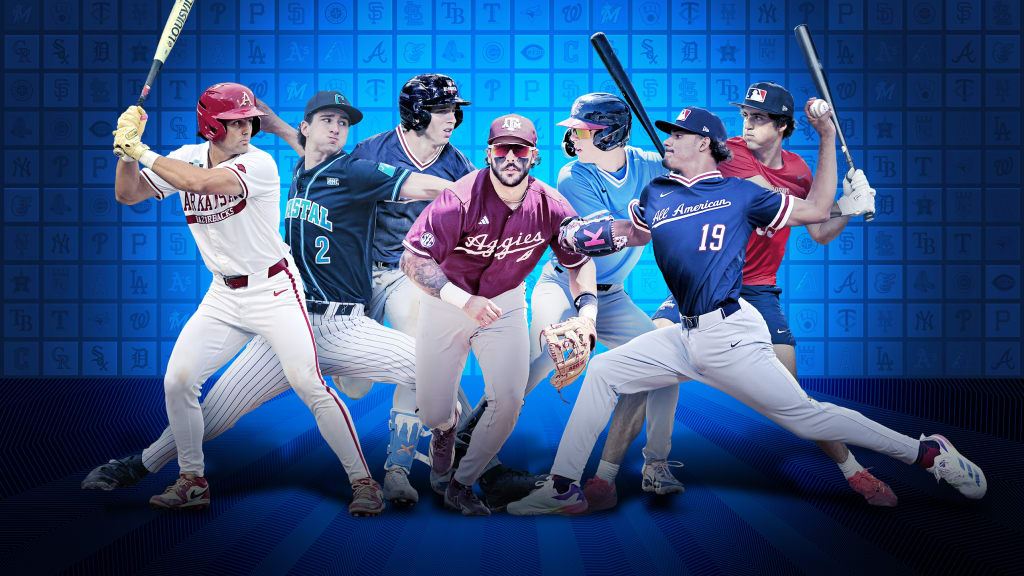
Teams made 613 Draft picks on Saturday and Sunday, beginning with the White Sox taking UCLA shortstop Roch Cholowsky at No. 1 and finishing with the Dodgers popping Illinois left-hander Zach Bates. We've already provided instant analysis of the first 40 selections and predicted which teams grabbed the most talent.
2026 MLB DRAFT PRESENTED BY NIPPON EXPRESS
• Signing/Bonus tracker | Favorite picks | Best hauls | Biggest steals
• Pick-by-pick analysis: Day 1 | Day 2 | Top storylines | Famous names
• Top 250 | Bonus pools, pick values | Top tools | Every No. 1 pick in history
• MLB Develops alumni | Best picks in past 10 years | Final mock
• Draft Tracker | Order | Best by state | Complete coverage
Now it's time to identify our favorite choices by each club. We may like the talent value for where the player landed, we may appreciate the fit between the organization and prospect, or he may just be a gut-feel guy for us. The picks below run the gamut from 11 first-rounders to the ninth round. More detailed reports on all the players below can be found with MLB Pipeline's Draft Top 250.
Jump to: AL East | AL Central | AL West | NL East | NL Central | NL West
AMERICAN LEAGUE EAST
Blue Jays: Will Brick, C (fourth round)
The Memphis prepster has a history of performing on a big stage after playing in the 18-and-under World Cup in Japan last fall, and his showing there pushed him to reclassify to the 2026 Draft. His arm strength and defense behind the plate draw raves from scouts, and while there are some swing-and-miss concerns, he can show off plus raw power in batting practice in a sign of what could come in games. A righty-hitting high-school catcher might be a tough demographic, but the present aptitude and future projection make Brick a nice get for the Blue Jays in the fourth.
Orioles: Eric Booth Jr., OF (first round)
It had seemed, at least until a day or two before the Draft, that Booth would go ahead of the Orioles, perhaps to the Pirates at 5 or Royals at 6, and that the Orioles would then go with a college bat. But when things got shuffled a bit up top, the O’s didn’t hesitate to take Booth’s 70-grade speed and excellent all-around tools instead of the perceived “safer” pick.
Rays: Grady Emerson, SS (first round)
Tampa Bay got the No. 1 prospect on the MLB Pipeline Top 250 rankings with the second overall pick. No need to agonize over this one. Emerson had arguably the best future hit tool in the Draft with his history of strong swing decisions and all-fields power, and he could be a plus fielder at a premium position. He should immediately be in the conversation with Theo Gillen – already a Top 10 overall prospect himself – for the top talent in the Rays system.
Red Sox: Martin Shelar, OF (ninth round)
The Red Sox may have surprised some teams by drafting North Carolina shortstop Jack Schaffner at No. 20, and they'll use some of the savings with that choice to pay Shelar after floating him all the way down to the 274th overall selection. The Marist HS (Atlanta) product is a solidly built 6-foot-2, 205-pounder who led all high schoolers with 19 homers in 33 games and uncorked a 470-foot blast at the MLB Draft Combine. More than just a slugger, he also has solid speed and the arm strength for right field.
Yankees: Hunter Dietz, LHP (supplemental first round)
The best college left-hander and second-best college arm slid to the Yankees at No. 35, in part because he worked just 1 2/3 innings in his first two college seasons at Arkansas. Dietz performed well all spring, striking out 131 in 85 2/3 innings and finishing with a 14-K effort against Kansas in the NCAA regionals. He's a 6-foot-6, 235-pounder with a 94-96 mph fastball that reaches 97 and a mid-80s slider, upper-80s cutter and low-80s curveball that all can be plus pitches at their best.
AMERICAN LEAGUE CENTRAL
Guardians: Savion Sims, RHP (seventh round)
This is a perfect marriage between a high schooler with one of the most electric if unrefined arms in the Draft and an organization that excels at developing pitching. A Prestonwood Christian Academy (Plano, Texas) product, Sims already reaches 100 mph with little effort and should have more velocity once he fills out his 6-foot-8, 215-pound frame. He needs work on the rest of his arsenal, control and command, but the upside is huge.
Royals: Jack Slightom, RHP (second round)
After going the college route with its first two picks, Kansas City took a high-schooler at No. 56 overall and got some intriguing upside in the 6-foot-5 right-hander from Illinois. Slightom was already picking up velocity, touching 98 mph this spring, and it’s easy to project him adding more with a singular year-long focus on baseball. (He also played quarterback in the fall.) With that extra power could come an improved slider, while his changeup already flashes above-average.
Tigers: Cameron Flukey, RHP (first round)
Detroit hadn’t taken a college pitcher with its first pick since Casey Mize went 1-1 back in 2018, but as Flukey – who missed time for Coastal Carolina with a rib stress fracture early this spring – continued to fall, the Tigers were happy to leap at the chance to select the 6-foot-6 righty. His mid-90s fastball looks like a potential plus pitch, while he shows some feel for spin with a curveball and slider. A team shouldn’t draft for need in the first round, but with the top of the farm system heavy on bats, this is a nice fit.
Twins: Vahn Lackey, C (first round)
This might have seemed like a slam dunk, and the Twins didn’t overthink it. They were in position to take whichever of the top three – Roch Cholowsky, Grady Emerson or Lackey – was available. And that’s what they actually did, nabbing one of the best college performers in the country, a super-athletic catcher who has the chance to hit, and with power.
White Sox: Cole Prosek, 3B/C (second round)
The White Sox began their Draft by getting two players everyone knew they coveted in Cholowsky and Nazareth Academy (La Grange Park, Ill.) infielder Landon Thome, the son of Hall of Famer and Sox special assistant Jim Thome. Chicago then grabbed a first-round bat in the second round with Prosek, who comes from the same Magnolia Heights HS (Senatobia, Miss.) program that spawned Cooper Pratt. His quick left-handed stroke always seems to be on time, he has the potential to become a plus hitter with solid power, and his potential to possibly catch adds some intrigue.
AMERICAN LEAGUE WEST
Angels: Jared Grindlinger, OF (first round)
Talk about not your typical pick for an organization. Perhaps it was the departure of Perry Minasian, but the the Angels hadn’t taken a high school pick in the first round since 2018. And they went in on the super-young, super-projectable Grindlinger. He’s a legitimate two-way talent, but the Angels announced him as an outfielder, and that’s how they plan to have him start his career.
Astros: Landon Hughes, OF (first round)
The Astros draft players earlier than other teams rate them, their farm system never gets any love in media rankings and yet they consistently churn out talent that led to seven straight AL Championship Series appearances from 2017-23, another playoff berth in 2024 and 87 wins last season. Hughes' Draft position (No. 17) and Draft Top 250 ranking (No. 42) don't quite jibe, but he was one of the best offensive prospects in college baseball, executing quality swing decisions and making a lot of hard contact while batting .350 with 37 homers in two seasons at Texas Tech. He gets knocked for below-average speed and arm strength that relegate him to left field, but he can produce at the plate.
A’s: Mason Edwards, LHP (second round)
After getting Drew Burress with their first pick, they got another college player many thought could land in Round 1. Edwards has a solid three-pitch mix, led by his plus curve and above-average changeup, one that led to a 2.07 ERA and a 15.9 K/9 rate for Southern Cal this year.
Mariners: Ace Reese, 3B (first round)
The Mariners hadn’t taken a college bat in the first round since 2017, having had stretches of high school hitters and college arms behind that. Many thought that Reese’s power bat – he hit 45 homers over his last two years at Mississippi State – would be gone in the teens, so this is a good get at No. 24.
Rangers: Gio Rojas, LHP (first round)
The industry's skittishness about the risk associated with high school arms contributed to the Draft's best southpaw lasting until No. 16, but the Rangers have absolutely no complaints. The Stoneman Douglas HS (Parkland, Fla.) product is a projectable 6-foot-4, 195-pounder who already pushes his lively fastball to 98 mph, backs it up with a sweeping low-80s slider and shows feel for a low-80s changeup.
NATIONAL LEAGUE EAST
Braves: Kaiden McCarthy, RHP (second round)
The Braves saved money with their first two picks (AJ Gracia and Carter Beck), allowing them to go after high-end high school players like McCarthy and Jensen Hirschkorn a round later. Northeast scouts said that McCarthy, who hails from Vermont and reclassified for this year’s Draft, would have pitched his way into first-round conversations next year had he participated in the summer showcase circuit with his class. He’s super-athletic on the mound and has been up to 99 mph.
Marlins: Jacob Lombard, SS (first round)
Long projected to go among the first six selections, Lombard wound up sliding all the way to No. 14. The Gulliver Prep (Miami) shortstop is the son of former big leaguer George Lombard and the brother of top Yankees prospect George Jr. While some clubs have some swing-and-miss concerns with Jacob, he's a no-doubt shortstop with potential plus power and well above-average speed.
Mets: Aiden Robbins, OF (third round)
Teams might have been scared off by Robbins’ 22.9 percent K rate and struggles versus secondary pitches in his one season at Texas, but those issues also coincided with 24 homers, exactly double his 2024 and 2025 output at Seton Hall combined. An average runner, Robbins also has a chance to stick in center, and up-the-middle power prospects with a history of collegiate performance aren’t always available at No. 92 overall.
Nationals: Chris Hacopian, 2B (first round)
Sure, there’s a good story here in that Hacopian is a Potomac, Md., kid who spent two years with the Terrapins before heading to Texas A&M. But there’s an interesting organizational fit here too. Hacopian already earned plus hit tool grades with some noting his power could also be above-average if he elevates more on contact. One of the Nationals’ hitting development tenets is hitting the ball hard in the air, and their coaches and coordinators could be in line to unlock the next level in Hacopian’s bat.
Phillies: Will Gasparino, OF (fifth round)
Guys who are 6-foot-6 aren’t supposed to move this well, but Gasparino can really run and he can really play center field. Yes, there’s swing-and-miss in his game, but he started getting to his power this past year when he became more upright and athletic in the box, hitting 20 homers and finishing with an OPS of 1.071 in his one year at UCLA.
NATIONAL LEAGUE CENTRAL
Brewers: Sawyer Strosnider, OF (second round)
Strosnider was often mocked to Milwaukee at the 25th overall pick, so it worked out nicely for the Crew when the TCU outfielder was still available 41 spots later. The sophomore-eligible slugger has plus power that has been a feature of many prominent Brewers picks in recent years, and his speed earns similar 60 grades. Improving the swing decisions to help his angles off the bat could be a priority in pro ball.
Cardinals: Rocco Maniscalco, SS (second round)
Maniscalco was only 17 years and two months old on Draft day, but he reclassified to become eligible this year out of the Alabama prep ranks. Close watchers of the MLB Draft Combine will recall him putting on a show in Arizona with multiple balls above 100 mph and an impressive defensive display at shortstop. Maniscalco faces some questions about his overall contact ability, but given his age, he will be a long-term project – and by all accounts a fun one – in the Cardinals system anyways.
Cubs: Caden Sorrell, OF (second round)
While the Cubs spent 11 of their top 13 choices on some much-needed pitching, they also snared one of the toolsiest college players available in the second round. His power, speed, arm strength and outfield defense all grade as average to plus, though his aggressive left-handed swing can get too long and uphill if he hunts home runs. Both of his grandfathers (Tom Griffin, Billy Sorrell) played in the big leagues.
Pirates: Aiden Ruiz, SS (second round)
The Pirates will save money on Derek Curiel in the first and likely go over-slot to ink Ruiz, who many thought would go as high as the back end of the first round. He’s one of the best defensive shortstops in the class with impressive bat-to-ball skills, and he added strength this year, showing more impact than he had in the past.
Reds: Mulivai Levu, 1B (supplemental second round)
The Reds took a college bat with their first three picks, and we’ve longed liked Levu as a sleeper college performer (and not just because he honors his tradition by participating in the ritual of fire knifing). This is the guy No. 1 overall pick and Levu’s UCLA teammate, Roch Cholowsky, would point to and say he was the best hitter in the country. It was for good reason: Levu hit .340 with 18 homers in 2026 for the Bruins.
NATIONAL LEAGUE WEST
D-backs: Ryder Helfrick, C (first round)
The D-backs haven’t drafted a catcher with their first pick since 2012, but the club found the Arkansas backstop too good to pass up at 15th overall. Ranked No. 11 on the Pipeline 250, Helfrick has shown signs of above-average power since he tied for the Cape Cod League lead with 11 homers in 2024, and both his glovework and arm earn plus grades from behind the plate. Arizona has a few interesting catching prospects in the system already, like Carlos Virahonda and Alberto Barriga, but Helfrick enters with the highest upside.
Dodgers: Bo Lowrance, 3B (supplemental first round)
No one feels sorry for the Dodgers, but the two-time defending World Series were the last team to exercise a selection, having to wait all the way until No. 40. And yet they still came away with one of the more intriguing prep bats in Christ Church Episcopal HS (Greenville, S.C.) third baseman Lowrance, who has drawn some Freddie Freeman comparisons for his offensive prowess. The 6-foot-5, 200-pounder makes consistent hard contact to all fields with a mature approach and sweet left-handed swing.
Giants: Carson Bolemon, LHP (supplemental first round)
Not only did the Giants land the consensus best pitcher in the Draft with UC Santa Barbara right-hander Jackson Flora at No. 4, they also nabbed the guy who entered the year as the consensus best pitcher with Southside Christian HS (Simpsonville, S.C.) left-hander Bolemon at No. 29. He has a track record of dominating in high school and with Team USA, thanks to uncanny command of a 91-96 mph fastball, a pair of plus breakers with a 78-82 mph curveball and low-80s sweeper, and feel for a mid-80s kick changeup.
Padres: Ryan Lynch, RHP (third round)
A Draft-eligible sophomore, Lynch transitioned from the Tar Heels bullpen as a freshman to the rotation this spring. His mid-90s power sinker and 83-85 mph sweeping slider both play like above-average pitches in shorter spurts, but he’ll need to find a better changeup at the next level. Padres scouting director Chris Kemp noted that he believes Lynch can be “a power starter,” and it didn’t hurt that the righty showed out in postseason play in that role heading into the Draft. But if Lynch needs to move back to the bullpen, San Diego has a history of fast-laning its premier relief prospects to the bigs.
Rockies: Logan Reddemann, RHP (second round)
The Rockies were college heavy at the top, and they got some good value shopping in that demographic. After nabbing Tyler Bell at No. 10 overall, they got the Golden Spikes Award winner Daniel Jackson at No. 37 and followed that up with Reddemann, who might have been considered one of the best college arms in the class if he hadn’t been shut down for a spell. He came back to throw bullpens, including at the Draft Combine, giving some confidence that he's healthy and allowing the Rockies to get his five-pitch mix later than would have been expected.