

Yusei Kikuchi and Shohei Ohtani — two stars who rose from Iwate Prefecture to the world stage — have been named to Japan’s roster for this spring’s World Baseball Classic. Both graduates of Hanamaki Higashi High School, what impact have the two had on their hometown of Iwate and their alma mater? This two-part series explores their legacy. You can read part one, with a visit to Kikuchi's training center, here.
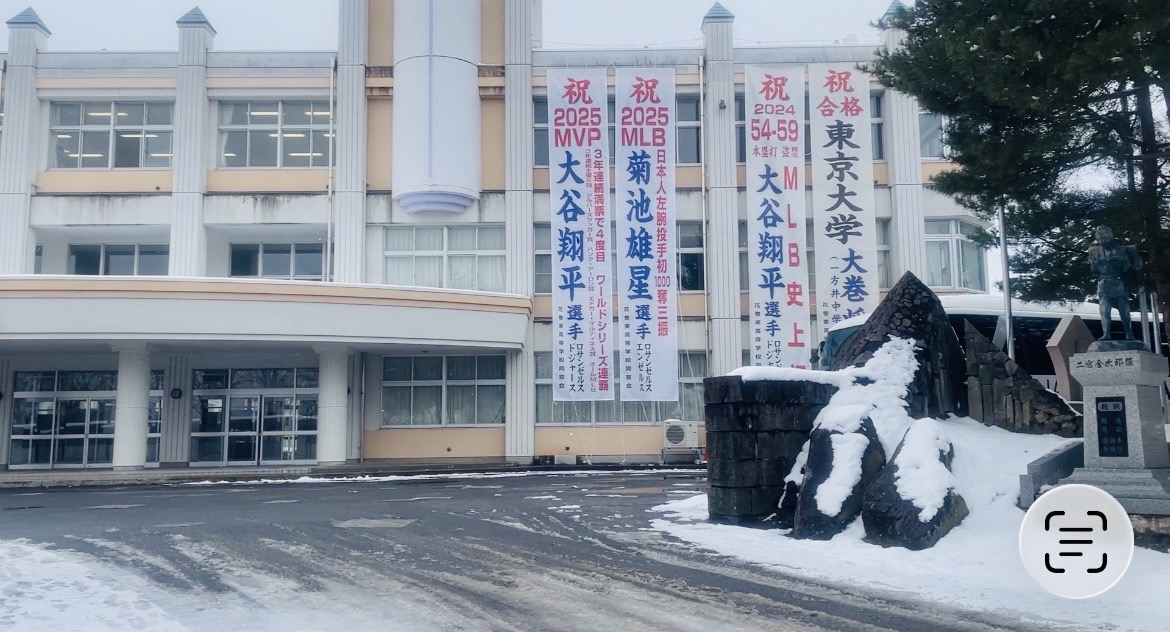
“First Japanese left-hander to reach 1,000 career strikeouts: Yusei Kikuchi”
“Four-time MVP: Shohei Ohtani”
Walking past the Hanamaki Higashi High School in Hanamaki, Iwate Prefecture, massive banners cover the walls and the road leads onward through falling snow. Ahead lies a practice field blanketed in white.
This is where Yusei Kikuchi and Shohei Ohtani began their journeys.
Behind home plate, monuments bearing their handprints stand alongside commemorative panels. Their presence can still be felt throughout the grounds and training facilities.
“To be the best in Japan, starting from Iwate.”
With those words displayed in left-center field, Kikuchi and Ohtani chased their baseball dreams every single day.
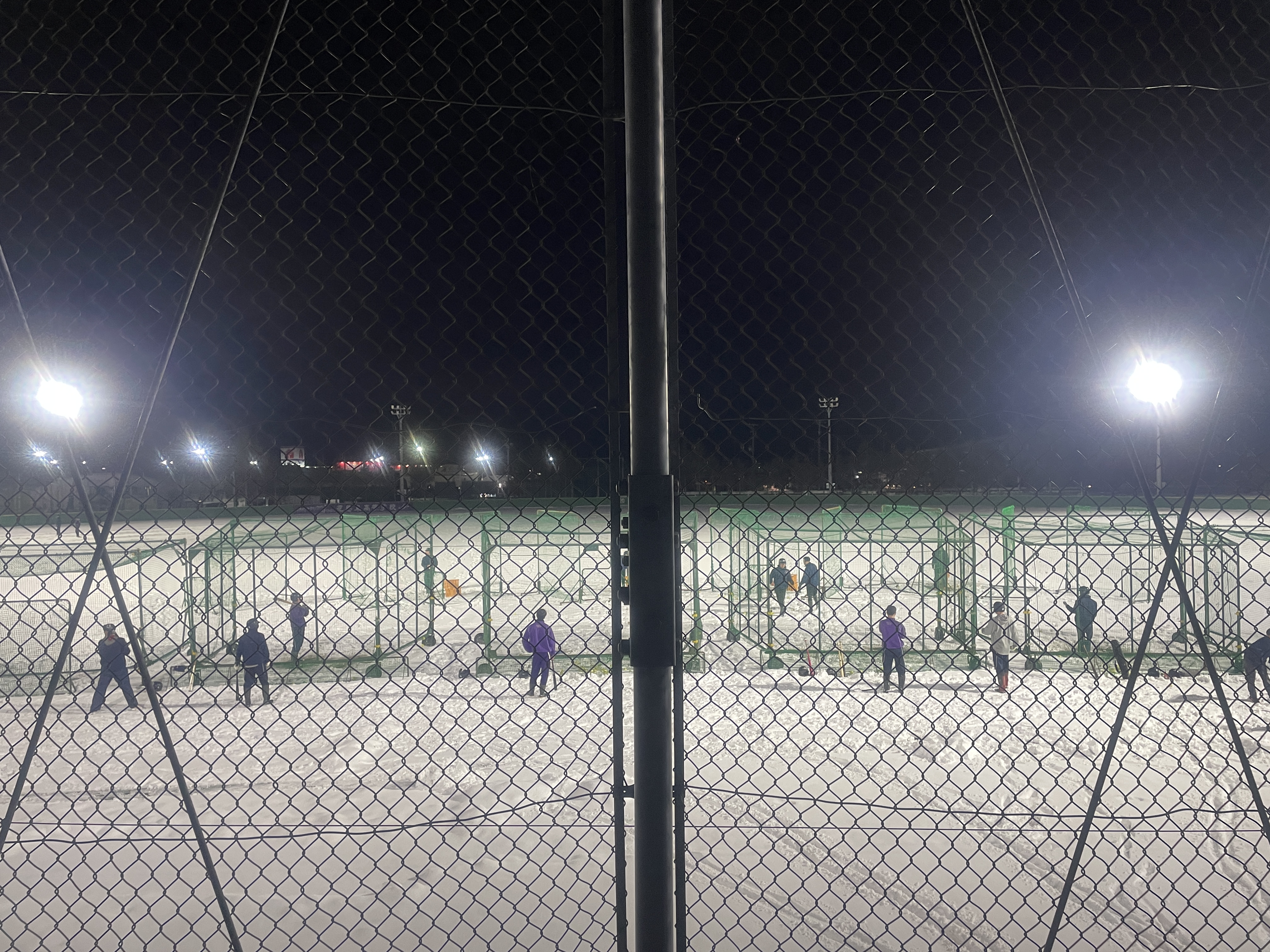
Hanamaki Higashi first captured national attention through Kikuchi.
At the 2009 Spring Koshien high school tournament, he took the mound as the team’s ace and led the school to the championship game for the first time in either the spring or summer tournaments. Though they fell short of the title, his performance left a lasting impression not only in Iwate but across Japan.
There is little doubt that Kikuchi’s pitching changed how coaches and young players in Iwate -- once considered a baseball backwater -- viewed what was possible. What was once unthinkable was now something to dream of: Bring the championship flag to Iwate.
Three years later, Ohtani chose Hanamaki Higashi with that message firmly in mind.
Since then, many players inspired by Kikuchi and Ohtani have followed in their footsteps. Among them is a high school sophomore infielder, Daito Furuki, the current captain of the boys’ baseball team.
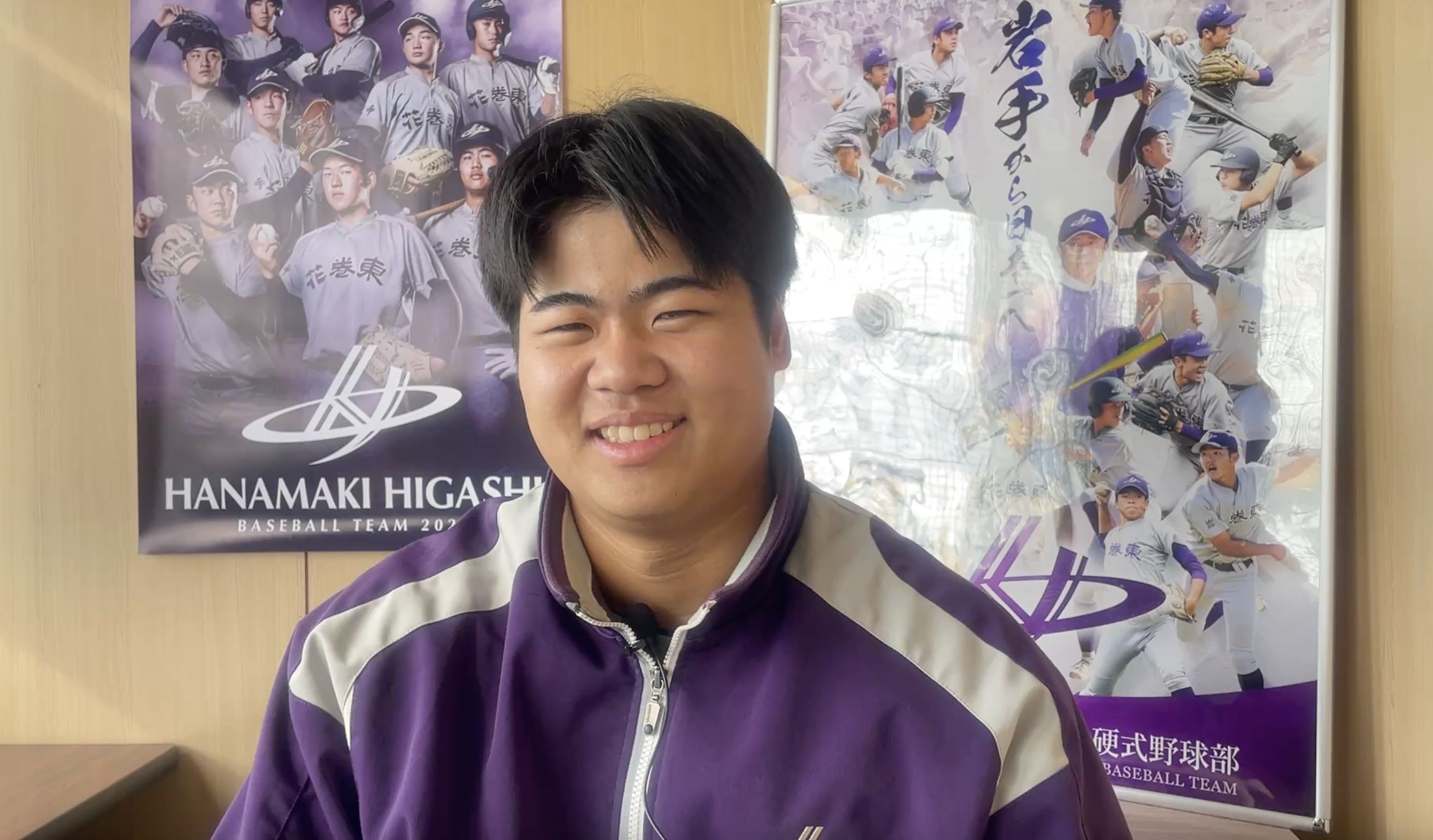
For Furuki, Ohtani has been a special figure since childhood. He has followed his career since the early years of elementary school.
“Ohtani was someone you only saw in anime or manga -- yet he existed in real life,” Furuki said.
Those words captured the impact Ohtani had on a young baseball fan.
Furuki, originally from Kanagawa, enrolled at Hanamaki Higashi through a connection between his father, former professional player Shigeyuki Furuki, and head coach Hiroshi Sasaki, who were college baseball teammates.
“I learned not only about baseball, but about how to live as a person, and even about life beyond baseball,” Furuki said.
Compared to his middle school days, Furuki feels his values have changed dramatically, crediting Ohtani’s influence for his mental growth.
Batting cleanup since his freshman year, Furuki has helped lead Hanamaki Higashi to consecutive Summer Koshien appearances. This fall, the team won the Tohoku Tournament and reached the semifinals of the Meiji Jingu Tournament, all but securing a second straight invitation to the Spring Koshien.
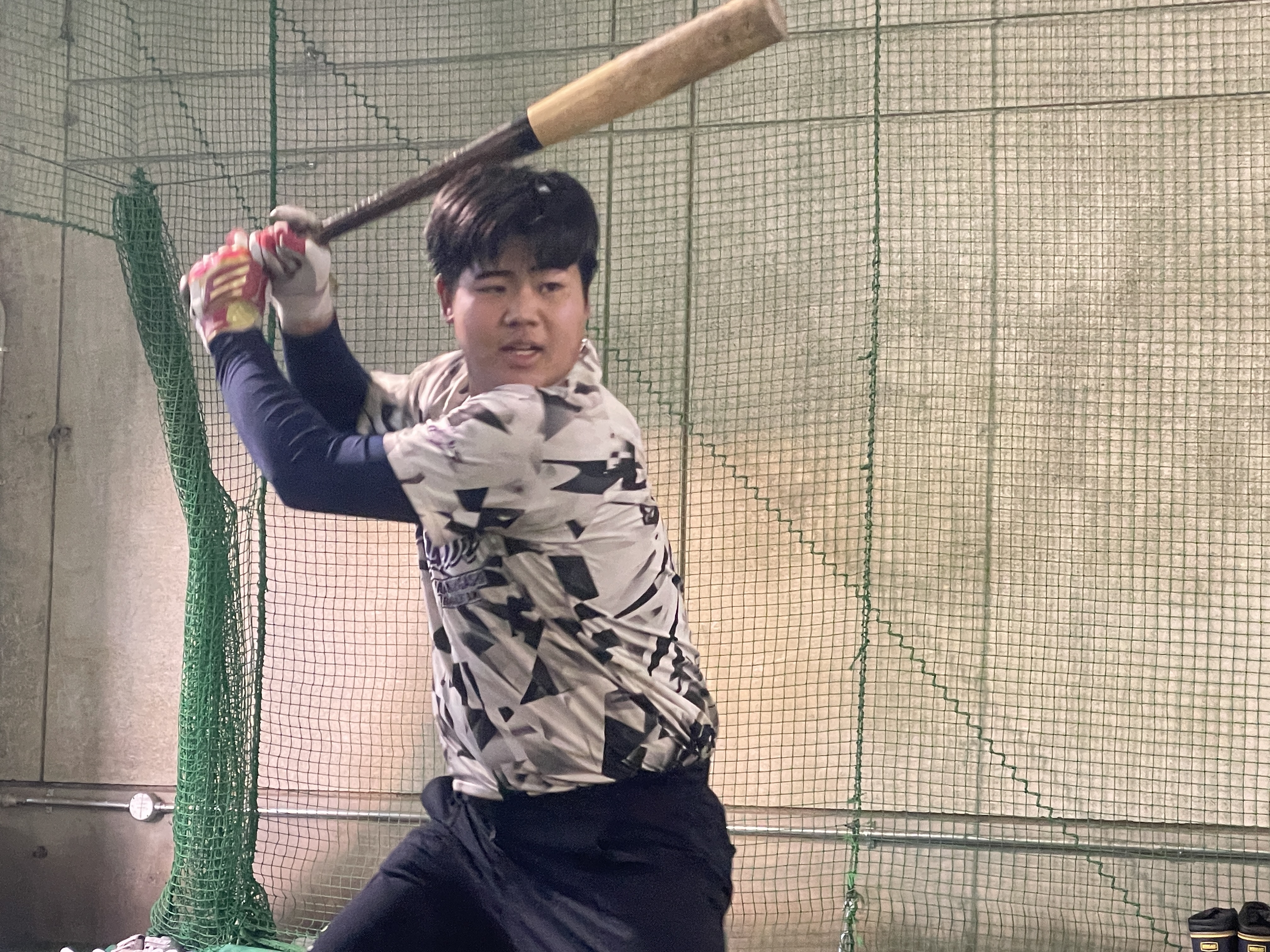
Furuki’s defining traits are his full swing and his clutch hitting. He has committed to a power-based approach in pressure situations -- and notably, he swings a wooden bat despite metal bats being standard in Japanese high school baseball.
“Even in an era where people say the ball doesn’t fly, my strength is the quality of the ball when I swing with full intent,” Furuki said.
Believing he can maximize his performance by swinging freely, he has chosen the more difficult path. As both the team’s offensive centerpiece and its captain, Furuki remains analytical about his role.
“In high school baseball, you often face pitchers with no data -- no pitch types, no velocity information,” he explained. “You have to focus intensely during the brief warm-up pitches and produce results. That’s what defines a good hitter.”
For Furuki, the pinnacle of a “great hitter” is, of course, Ohtani.
“I still think about the power in Ohtani’s swing,” he said.
With admiration as his foundation, Furuki continues to refine his approach at the plate.
⚾ ⚾ ⚾
A five-minute drive from campus leads to agricultural greenhouses typically used to grow vegetables. During winter, when snow makes the fields unusable, two of these structures become practice facilities.
“As soon as you step inside, you understand the difference between boys and girls,” said club director, Mr. Hiroyuki Sasuga, with a big smile.
Laughter spills from the building before the door even opens. Inside, players are split into two groups, rotating between batting and defensive drills. Though space is limited, the atmosphere is vibrant and energetic.
Head coach of the girls baseball team, Mr. Numata — formerly a boys team manager at Ichinoseki Gakuin High School — took over the program in 2023.
“The girls are incredibly upbeat,” Numata said. “Even during pregame fungo, they look like they’re having fun. It lifts everyone’s spirits. Coaching girls allowed me to rediscover the joy of baseball.”
In one corner, players practiced bunting, focusing on efficiency with a limited number of balls. In another, defenders moved the ball relay-style, maintaining a sharp rhythm.
At the center of the facility stands a batting machine with unmistakable presence. On its front are the words: Gifted by Shohei Ohtani.
When the girls’ program was founded, Ohtani gifted the machine in hopes of supporting the growth of girls baseball. While the exact numbers are unclear, there is little doubt that Ohtani’s influence has helped expand the sport nationwide.
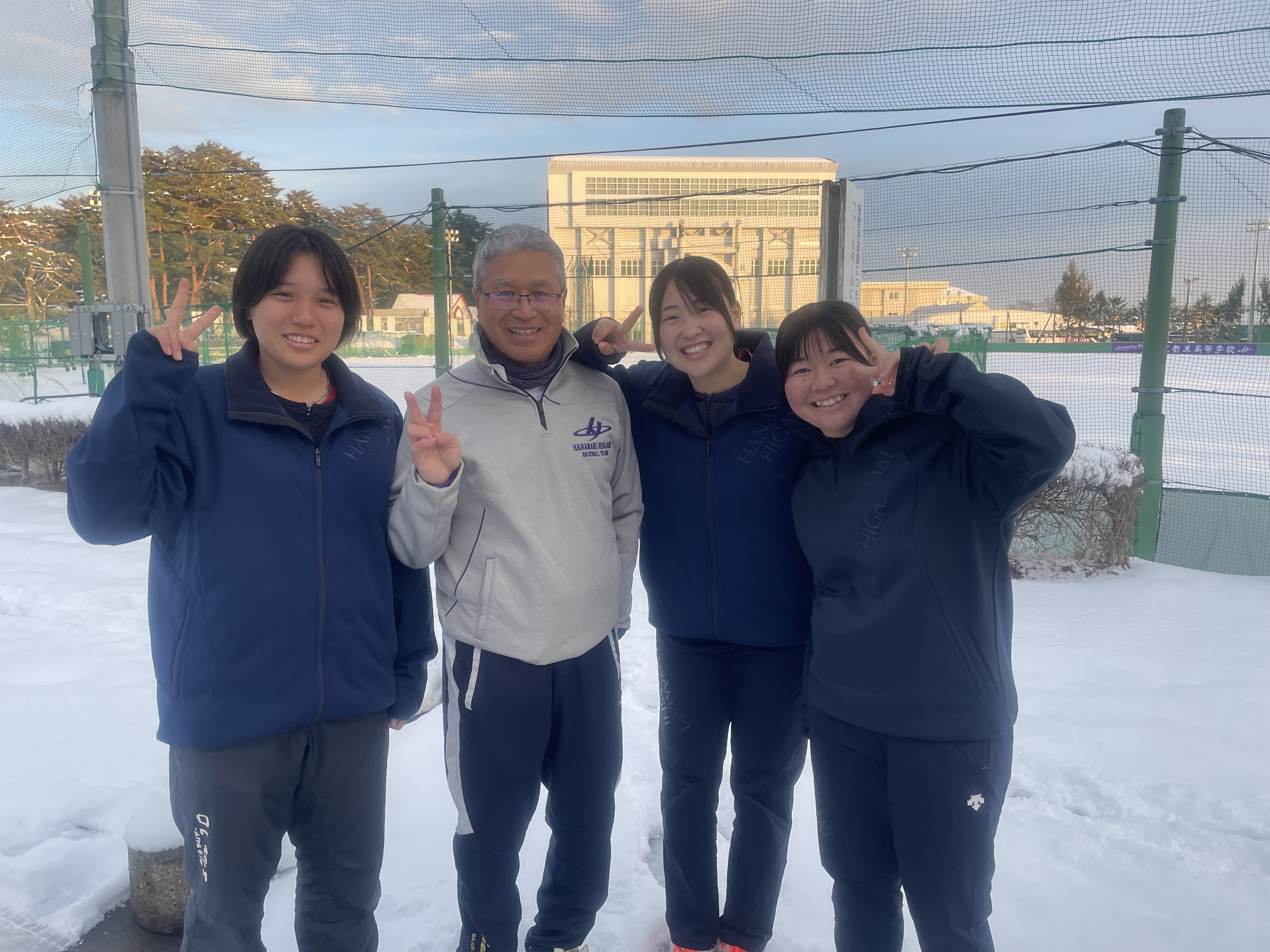
Some players have traveled great distances to wear the same uniform as their idol. High school sophomore catcher Rina Tanaka came from Kumamoto in Kyushu, roughly 800 miles away.
“I admired Ohtani’s skills from his Angels days,” she said. “But even more than that, I was drawn to his character. That’s why I chose Hanamaki Higashi High School.”
Team captain Momomi Kamiyama, from Kanagawa, cited the school’s environment.
“The dorms are well-equipped, and the overall setting is ideal,” she said. “And honestly, the uniform looks great — it motivates you.”
“When I first put it on, my heart was racing,” Tanaka recalled.
It is the same uniform once worn by Kikuchi and Ohtani. Its weight carries special meaning.
⚾ ⚾ ⚾
Of course, the school’s reputation alone isn’t the only reason players choose Hanamaki Higashi High. The dormitory system, the focus on academics, and a structure that allows students to fully commit to baseball all play major roles.
Still, it is impossible to deny the pull of Ohtani’s presence, the force strong enough to bring players from Kyushu to Iwate, solely for baseball. His influence remains immeasurable.
And soon, that reach will extend even further. Next spring, players from Germany and the U.S. are expected to join the boys’ program.
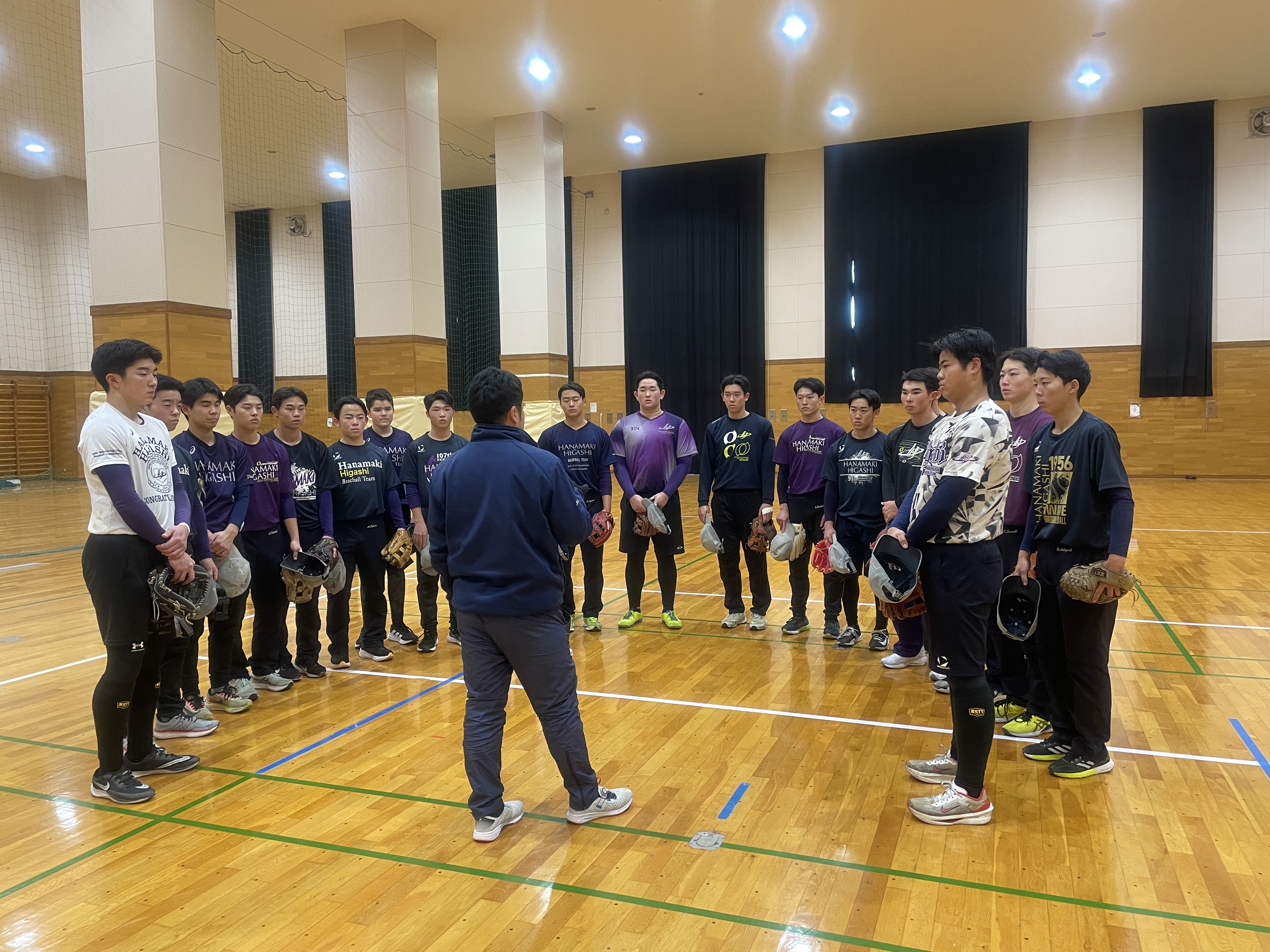
With busy schedules, these students rarely watch full Major League games. Most simply check scores or highlights on their phones before bed. Yet the success of Kikuchi and Ohtani gives them something vital: the belief that they, too, can make it. They continue swinging bats and chasing baseballs in the cold air, each swing carrying both admiration and resolve.
Kikuchi and Ohtani pursued the world’s highest stage. Rintaro Sasaki chose a different path, heading to the United States through college baseball. Though their routes differ, they share the same mindset — challenging themselves at ever higher levels.
Today’s high school players are watching closely. Not just the way they play, but the way they live. And inspired by those examples, they are ready to take their own next steps.