



Jacob Misiorowski is supposed to be the most dominant pitcher on the planet. In the playoffs, he hasn't quite been that. Miz has been good, not great. That didn't stop the Brewers from steamrolling their way to the National League pennant -- but if Milwaukee is going to win its first World Series, Misiorowski needs to dominate on the big stage.
Entering Game 1 of the Fall Classic, Milwaukee has won both of Misiorowski's postseason starts, but we're still waiting for a real Miz gem. Misiorowski hasn't gotten through five innings in either of his first two outings. The Padres and Dodgers were both able to battle through at-bats, spoil Misiorowski's normally unhittable stuff, force his pitch count up and get him out of the game early.
Misiorowski has thrown 182 pitches in these playoffs. Hitters have swung at 94 of those. And 51 times, they've fouled the ball off. That's over a quarter of his total pitches thrown, and over half of the swings against him. Miz, essentially, is allowing foul balls at the highest frequency in the playoffs. Hitters are fighting off his pitches over and over when they're supposed to be having trouble putting the bat on the ball at all.
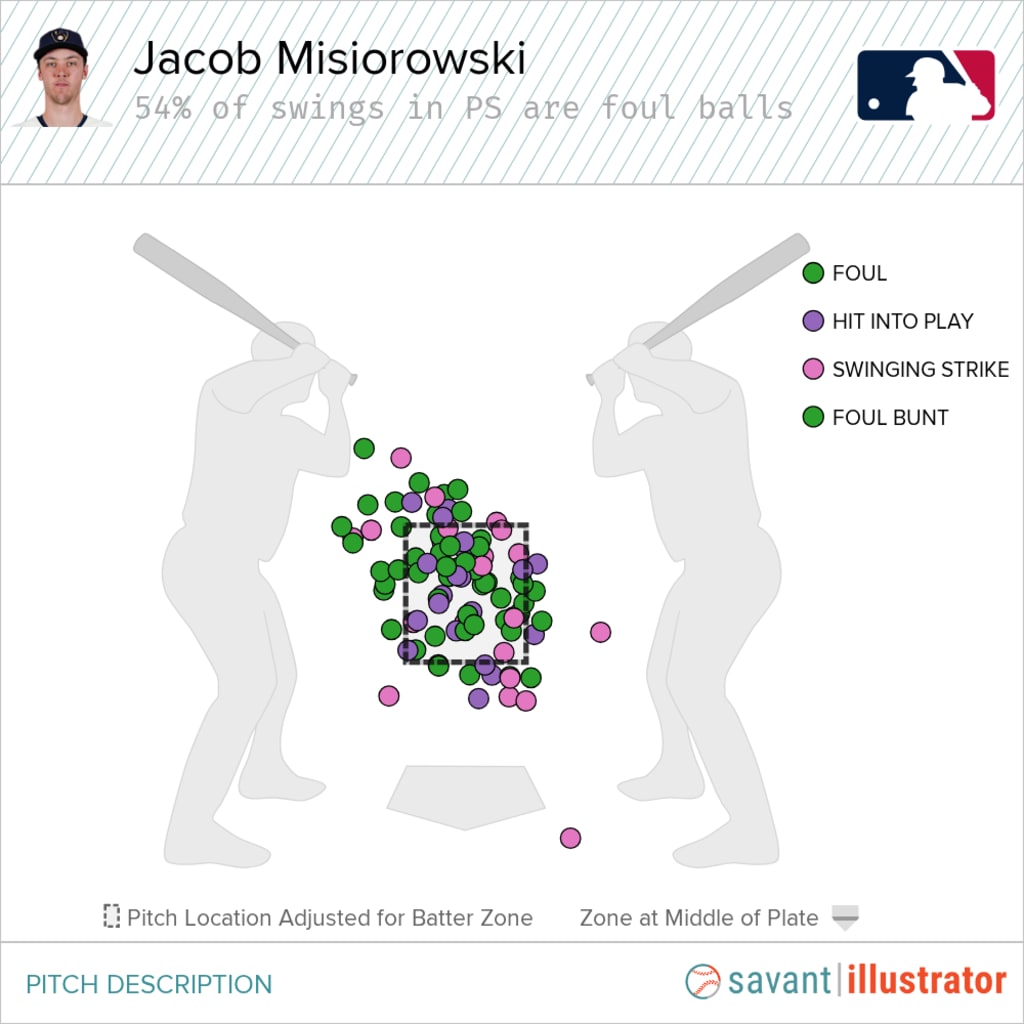
So what's going on? Why hasn't Misiorowski been able to put hitters away in the playoffs like he did during the regular season? And can he get his whiffs back in the World Series? Let's take a closer look.
The No. 1 culprit here is: Misiorowski's fastball whiffs are way down.
We're going to focus on the fastball here. Because for Misiorowski, that's what everything really stems from. The good old heater is by far the most important, and unique, pitch in his arsenal.
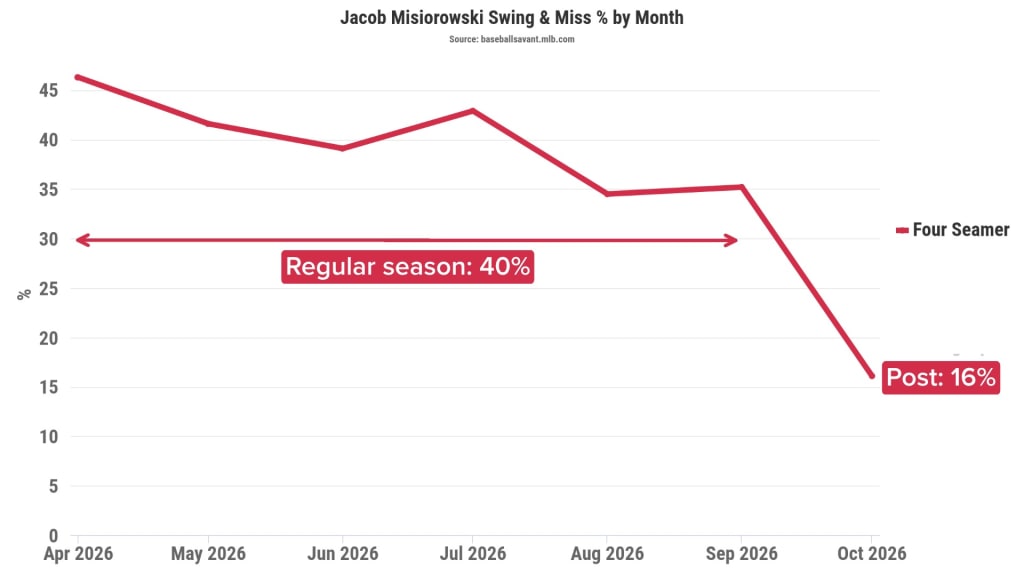
Misiorowski -- the tone-setter for the Brewers' rotation -- dominates with the fastball. He throws his heater well over 60% of the time, the most of any starting pitcher. And even seeing such a heavy volume of fastballs, hitters still usually get beat. Misiorowski generated a 40% swing-and-miss rate on his four-seamer in the regular season, which is a ridiculous number. He was even head-and-shoulders above pitchers like Mason Miller and Cam Schlittler.
But in the postseason, that whiff rate has fallen to just 16%. That's a very pedestrian number for a very un-pedestrian fastball -- somehow, it's one of the lower fastball whiff rates in the playoffs. A 24-point dropoff in fastball whiff rate from the regular season to the postseason is massive.
And Miz's heater hasn't lost its juice, either. He's averaging 101 mph in the playoffs. He topped out at 104-plus in both his NLDS and NLCS starts. Ninety-six of his 122 fastballs have been in triple digits. But he's not blowing away hitters the same way he was all year.
When Misiorowski's fastball is at its explosive best, hitters will swing under it, and they'll be late against it. In October, those ugly swings have disappeared. They've been replaced by much more competitive ones.
In particular, the right-handed hitters Miz has faced have not been swinging under his heater. And the left-handed hitters he's faced have not been late against it.
- Righties swung underneath Misiorowski's four-seamer 47% of the time in the regular season. In the playoffs, that's down to 36%.
- Lefties were late against Misiorowski's four-seamer on 34% of their swings in the regular season. In the playoffs, that's down to 14%.
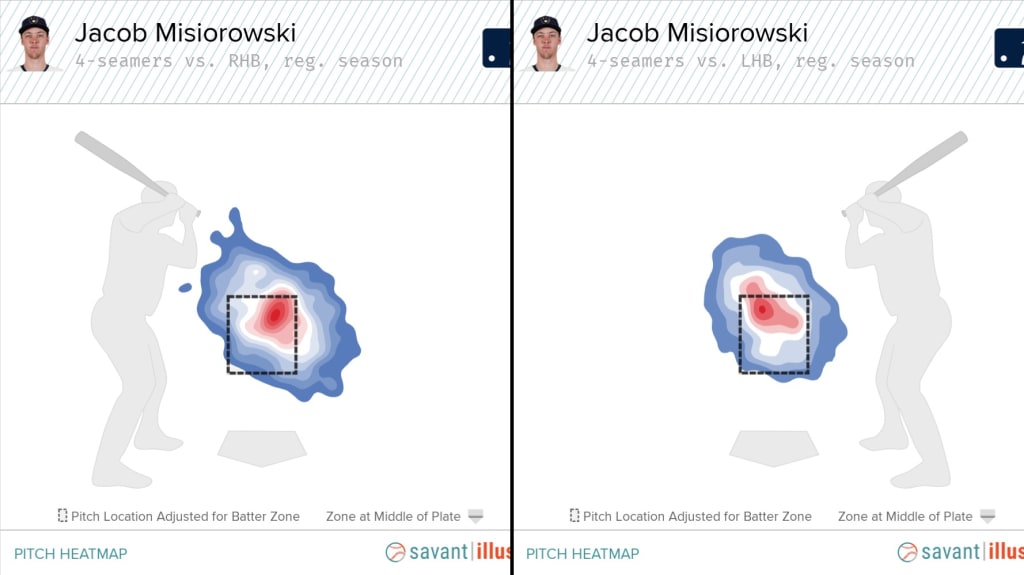
That's more of a "what's happening" than a "why it's happening," so here's one possible explanation for why the swings are getting more competitive against Misiorowski's fastball: He's not getting it to the spots where it's going to beat hitters every time.
Here are heatmaps of Miz's four-seam fastball locations in the regular season:
And here are those same heatmaps but for the postseason:
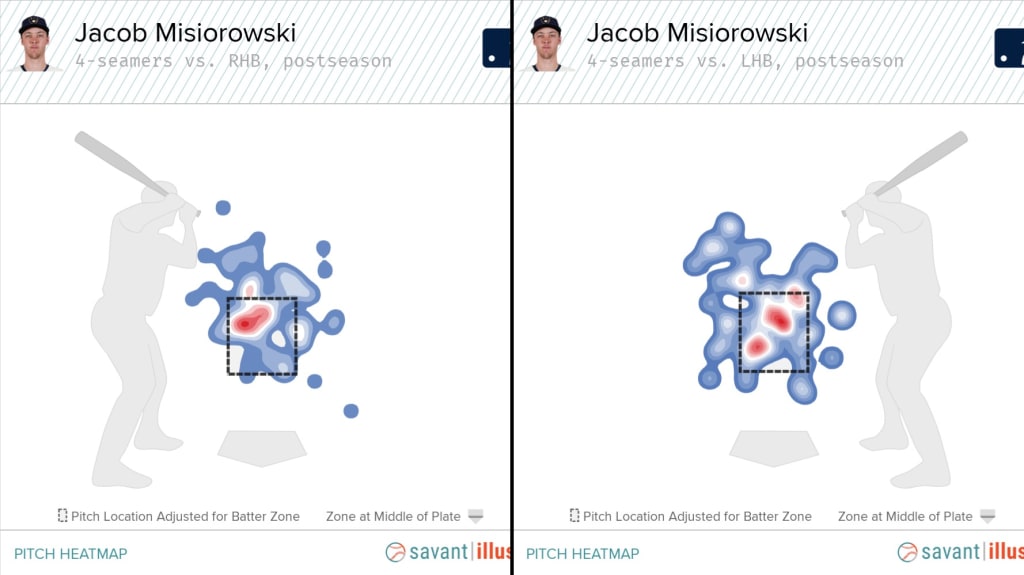
Miz wants to rip his heaters up and away. But in the postseason, against righty batters, those fastballs have leaked middle-in. Against lefties, they've been too often down and in the heart of the zone.
Worse fastball locations mean better swings from opposing hitters, and tougher battles for Misiorowski even when he's throwing in triple-digits. It's hard to do damage against a 100-plus mph fastball no matter where it's located, but those locations do make it just a little bit easier to time up Misiorowski. Maybe a hitter fouls off a ball he'd miss otherwise, and that translates to higher pitch counts and shorter starts for Miz.
So does taking more balls. Opposing hitters have managed to stay more disciplined against Miz's fastball in the postseason, particularly when he goes up and out of the strike zone. Misiorowski induced a 34% chase rate with his four-seamer in the regular season; in the playoffs, it's dropped to 27%. And on high fastballs specifically, his chase rate induced has fallen from 41% all the way to 32%.
Not only that, even when hitters have chased Misiorowski's heater this postseason, they've still managed to foul it off. In the regular season, when batters chased Misiorowski's four-seamer, they whiffed 56% of the time. In the postseason, when they've chased, they've only whiffed 7% of the time.
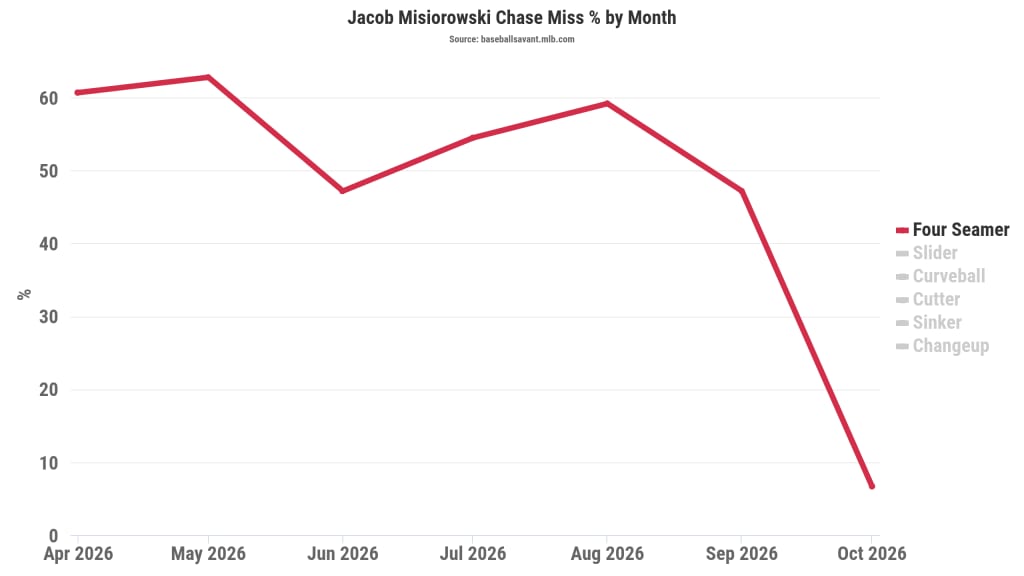
That's honestly shocking. Misiorowski has gotten only one single whiff on 15 swings against four-seamers out of the strike zone. The average velocity of those 15 four-seamers is 101.1 mph. If a hitter is chasing a triple-digit fastball out of the zone, you expect him to miss. There's just a crazy amount of spoiling being done against Misiorowski.
Hitters certainly seem to be locking in with the goal of fighting off Misiorowski's extreme heat. In the postseason, the swings against him have gotten shorter, especially with two strikes. Hitters are more shortened up with two strikes against Misiorowski than against any pitcher in the playoffs.
Swing length vs. Misiorowski, regular vs. postseason
- Overall: 7.0 feet ➡️ 6.8 feet
- With 2 strikes: 6.9 feet ➡️ 6.7 feet
It's not exactly going to get easier against the Rays in the World Series, either. The Rays make contact more often than any team in baseball, and in an admittedly small sample, they make pretty good contact even against triple-digit velocity. Plus, they've already beaten explosive fastball pitchers like Schlittler in these playoffs.
Now, if Misiorowski can dial back into his spots, he's still going to have the advantage, even against a skilled bat-to-ball team like the Rays. His stuff is that exceptional. It's going to be hard for hitters to keep fouling balls off as much as they have, and you'd think that all those 100-plus mph fastballs will start missing bats eventually, instead of clipping them.
If Miz can just get a little bounceback in his swing-and-miss numbers in the World Series, the Brewers' engine will start humming again. We want to see that peak, overpowering Miz whose philosophy is to just let his fastball rip and tell the hitter: "Good luck."
Tampa Bay's going to give him a fight, though, just like the Dodgers and Padres did. But it's not like winning a World Series is supposed to be easy -- not even for Misiorowski, the hardest-throwing starter we've ever seen.