


This story was excerpted from Adam Berry's Rays Beat newsletter. To read the full newsletter, click here. And subscribe to get it regularly in your inbox.
PORT CHARLOTTE, Fla. -- For most, the role of utility infielder might not sound like much of a dream job. It’s often a label applied to someone who bounces around the dirt, playing sparingly with the assumption that he’s not fit to handle everyday work.
But the Rays are not most teams. And that’s not the way they feel about utility man Ben Williamson.
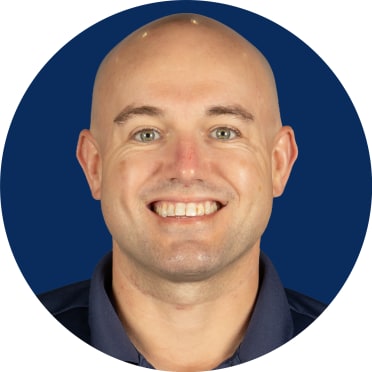
Acquired from Seattle in a three-team trade on Feb. 2, Williamson has a chance to claim a key role in Tampa Bay’s infield. He could platoon at second base with Gavin Lux, back up Taylor Walls at shortstop and step in at third on Junior Caminero's days off.
That could add up to a lot of playing time for the 25-year-old. That’s the way it worked out for José Caballero, another former Mariners infielder who played his way into a super-utility role with the Rays before being traded to the Yankees last year.
“We’ll see how the camp goes, but that type of role fits us very well right now,” manager Kevin Cash said. “And I think that Ben is putting his best foot forward in the early going of spring.”
To do that, Williamson has put his feet in different parts of the dirt.
He’s regarded as an excellent defensive third baseman, and that’s where he has spent nearly his entire professional career. But Caminero’s not going anywhere, so a little more versatility will be required to grab significant playing time. That’s why Williamson has been taking most of his reps at shortstop and second base this spring, with the Rays believing his reflexes and athleticism will translate well to the middle of the infield.
“You watch him defend, [and] he really catches the ball,” Cash said. “He moves his feet really well. He's got a good clock, so I think it'll be pretty seamless.”
Williamson spent four months as the Mariners’ everyday third baseman last season, then finished the year in the Minors after Seattle acquired slugger Eugenio Suárez at the Trade Deadline. He proved himself defensively with the Mariners, but had his ups and downs at the plate, as he hit just .253/.294/.310 with one homer and 21 RBIs in 85 games.
Reflecting on his initial experience in the Majors, Williamson joked, “I think I learned pitchers make money, too. There’s a reason they get paid.” On a more serious note, he said he identified a few things in his swing to “clean up” over the winter: staying on his back leg more consistently, keeping his head still and not letting pitchers speed him up.
Williamson was more of a contact hitter during his short time in the Minors, batting .291 with a strikeout rate under 20%, but there could be more power in his bat. Standing 6-foot and 210 pounds, he doesn’t exactly look the part of a scrappy utility infielder.
At his coaches’ advice, Williamson put on 20 pounds of muscle after going undrafted as a junior at William & Mary, then returned to Williamsburg for his final season. He trained in the gym 10 times a week, started taking creatine and said he was essentially “doing [his] best to become a meathead.”
It worked. He found himself swinging a heavier bat, but it felt lighter. He upped his home run output from seven over his first three seasons, cumulatively, to 12 as a senior. And he wound up getting taken by the Mariners in the second round of the 2023 Draft.
“I was bigger, faster, stronger than I’d ever been. The contact was always there, but I never really hit for much power,” he said. “Then, all of a sudden, the low-liner singles are turning into doubles, and the pop flies to the warning track were turning into homers.”
His next challenge: turning his wizardry at the hot corner into middle-infield magic.
Williamson has some history at shortstop, having played there through high school and some in college -- he actually didn’t make the move to third until his senior year at William & Mary. The other side of the infield is a little more foreign to him, as he only played second base for 51 innings over six games in the Minors.
“I'm most comfortable at third base, but at the same point in time, I trust my ability with the glove to field a ground ball wherever,” he said. “It's mostly like the different plays, cuts and relays, double-play feeds, knowing where to be on bunts, stuff like that that's going to be the most work for me.”
Nearly a week into the Spring Training schedule, he’s played two games at both shortstop and second base and has worked extensively before games with third-base/infield coach Brady Williams to learn the nuances of both spots. It has felt “pretty natural,” he said, although there are plenty of differences in the timing, footwork and positioning involved.
But he understands the assignment and is aware of the chances it could create for him.
“Any time I’m getting any sort of playing time, whatever level it’s at, I’m super grateful for it,” he said. “I’m excited for any opportunity I get.”