


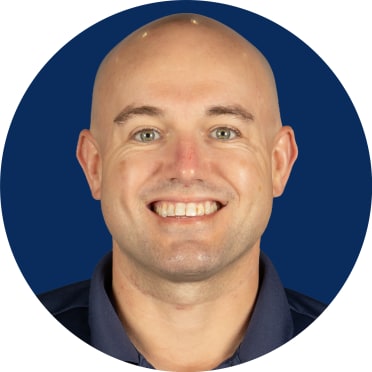
MILWAUKEE -- Have you heard the serendipitous story about how the Rays wound up signing first baseman Jonathan Aranda?
Carlos Rodriguez, the Rays’ international scouting director in 2015, wanted to evaluate a Cuban outfielder who was training in Tijuana, Mexico: Randy Arozarena. They lacked the international spending capacity to sign Arozarena at the time, but Rodriguez abided by a scouting philosophy: “You’re always dangerous at the ballpark.”
Arozarena never showed up for the workout, although he eventually became a postseason hero and fan favorite for Tampa Bay, so Rodriguez asked to see the younger players at the Toros’ academy to make his trip worthwhile. The Rays were intrigued enough by the 17-year-old Aranda, then a 160-pound shortstop, to offer him $130,000.
Aranda signed with the Rays on July 2, 2015. The Rays lost their game that day with Matt Moore on the mound and Evan Longoria batting third against a Cleveland team with Corey Kluber pitching and Francisco Lindor playing his 16th career game.
Aranda’s journey to the World Series with the Rays is not merely about how they stumbled upon him, though. It’s about how they stuck with him.
For 11 years. At every level of the organization. In a bunch of different positions, including one ill-fated attempt to make him a catcher. Through all the ups and downs. From the back fields of their academy in the Dominican Republic to the 2025 All-Star Game in Atlanta and, now, the World Series in Milwaukee.
“It's a great thing. It's not easy to be a Major Leaguer and be with an organization for an extremely long time. It's something I take a lot of pride in,” Aranda said through interpreter Kevin Vera. “Being here with the Major League team, with this season specifically, and knowing the goals that we have here soon, it's a really special feeling.
“Hopefully we can accomplish those here soon and achieve the goals that we want to achieve here in October.”
Aranda does not possess Yandy Díaz’s comic-book-hero biceps or silent-film-actor mannerisms. He does not have Junior Caminero’s jaw-dropping power or knack for finding the spotlight. He is the least well-known member of their “Big Three,” so perhaps it’s fitting that he typically bats after Díaz and before Caminero.
He is, however, every bit as important to the AL champion Rays’ success. He started 148 games during the regular season -- only Caminero (162) and Díaz (154) were in the lineup more often -- and batted .274 with a .792 OPS. His sweet left-handed swing blends power and patience, forcing opposing managers to think twice before sending in a right-handed reliever to face Díaz and Caminero.
But it was not always a sure thing that Aranda would reach this point. That’s what makes it so rewarding, in so many ways for so many people with the Rays, to see Aranda reach the World Series as the longest-tenured player in the organization.
He played for eight teams in their system, including some at levels that no longer exist. He spent parts of three seasons with Triple-A Durham, waiting for his chance to break through. He worked hard and rewarded the faith of the people who never stopped believing in that kid they saw in Tijuana years ago.
“Player development success story and scouting success story -- both of those,” said senior director of baseball development Jeff McLerran, who helped run the club’s player development system during Aranda’s time in the Minor Leagues. “Just kind of the belief all along from the scouts that saw him who were like, ‘This guy will hit. I promise you, this guy will hit.’”
For a long time, the question was where Aranda would play -- and if he would hit enough to justify a move down the defensive spectrum. He reached the High-A level and hit .272 in 2019, but his slugging percentage was just .383, hardly a figure that screams middle-of-the-order bat. There were people in the organization who didn’t believe he’d ever reach Double-A.
He began his career as a second baseman and bounced around the infield for essentially a decade before finding his home at first base. He was viewed by scouts as a “bad body” player. After the pandemic wiped out the 2020 Minor League season, the Rays approached him during the fall instructional league with an idea: How about catching?
He answered the question with his bat. Playing mostly for Double-A Montgomery in 2021, Aranda slashed .330/.418/.543 with 14 homers and 22 doubles in 102 games. He made himself into a legitimate prospect -- and he never started a game behind the plate.
“He definitely has the baseball IQ. We felt he had the toughness to be back there, and it was just a matter of, how did the skills translate into playing that position? Gave it a good run. I think it didn't ultimately stick,” McLerran said. “Thankfully, those who were the highest on his bat ended up being correct in that it certainly profiles at first base, as we've seen.”
Aranda tore up Triple-A pitching, batting .315 with a .959 OPS over parts of three seasons from 2022-24. But he couldn’t quite make it work with limited opportunities and inconsistent playing time in the Majors, batting just .222 with a .692 OPS for the Rays during those same three years.
But the Rays maintained their belief in Aranda, with manager Kevin Cash reiterating that he was too good in Triple-A to not hit in the Majors. And Aranda worked tirelessly to improve his defense at first base, calling it “a good challenge” as he tried to live up to the impossibly high defensive standard set by teammates such as Taylor Walls.
The Rays cleared a lane for him to be their first baseman in 2024, only for an injury to rob him of that opportunity. They did the same in 2025, and he turned himself into a middle-of-the-order All-Star before an injury ended his season unfortunately early.
He stayed healthy this year, and now, he’s a huge part of a Rays lineup eyeing the first World Series championship in franchise history.
“Just to see him continue to stick with it, to see the coaching staff have confidence in him to give him an opportunity, I think, was a big deal,” McLerran said. “I think that's just a testament to the way he goes about his business and what he does.
“It's really cool -- really cool -- to see his journey and to see him just keep getting better.”