


For Joshua and Richie Palacios, baseball began on the fields of Brooklyn. Every April, the brothers looked forward to Little League Opening Day, putting on their new uniforms and caps before heading to the Parade Ground at Prospect Park. Their father, Richard, a former Minor Leaguer, introduced them to the game.
As they got older, they realized how difficult it could be to keep playing baseball in New York City. Short outdoor seasons, cold winters and limited indoor facilities made year-round training a challenge, unlike in warmer states in the south and on the West Coast.
“Growing up, you talk to other guys who grew up in Florida, and they have A-plus batting cages and people who can spend all day working with their kids,” Richie said. “We don't have that. It's tough -- definitely tougher than in a lot of places in the United States.”
Richie experienced those limitations firsthand. His childhood club team, Sandlot, couldn't afford to travel extensively, leaving fewer opportunities to compete against teams from other areas and in front of scouts. For families unable to afford club teams and other programs, finding opportunities can be even harder.
“A lot of kids don't have the money. Their parents aren't able to pay for and afford those things, so it's hard for them to participate,” Richie said.
Both brothers eventually reached the Major Leagues with help from the people who supported them. Richie is coming off the Rays’ run to the World Series, which featured his key two-run single in Game 2 of the ALDS -- against his hometown Yankees.
Now they want to provide the next generation with opportunities they didn't always have growing up.
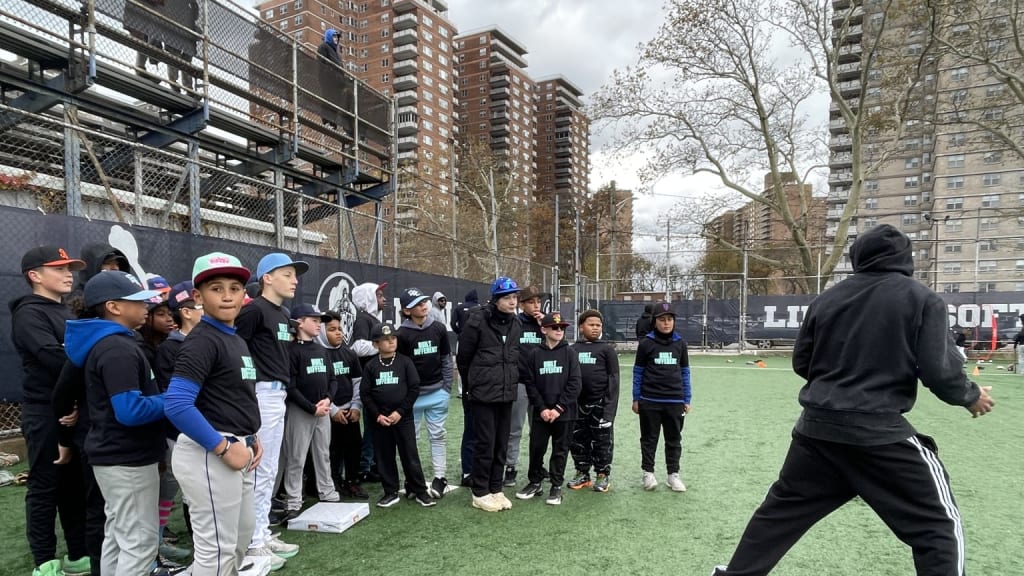
On Saturday, they returned to Brooklyn to host their annual Built Different Baseball Camp. More than 200 children attended the free event, which brought together eight players with Major League experience, three Minor League players, college students, local coaches and community volunteers. Supported by The Players Trust, the camp featured more than three hours of instruction in hitting, fielding, pitching and baserunning.
For Joshua, the camp is about passing along the opportunities others once gave him.
“Maybe one day, one of these kids will become a Major Leaguer or a professional athlete, and then they'll pass that on to the next kid by putting on a free camp,” he said.
Many of the coaches and volunteers grew up playing on the same fields as the brothers and donated their time.
“Most of these guys grew up with us,” Joshua said. “We played together on the same fields, doing the same things, so they understand the circumstances in New York City and how hard it is to play baseball here.”
Richie hoped the children understand that their backgrounds don't have to limit their futures.
“We want them to know that they can accomplish anything in life. We want to be living proof that even coming from New York, you can be successful in anything you want to do,” he said. “As long as you work hard, make sacrifices and don't get distracted, you can accomplish anything.”
The camp also gave the players who volunteered a chance to reconnect with the joy of the game. Rays outfielder Chandler Simpson, fresh off competing in the World Series, was greeted with cheers from the children. He welcomed the opportunity to serve as a role model.
“I love it. I'm glad I can be a role model for them,” Simpson said. “I want to continue to be an inspiration and inspire the youth, for them to be able to lean on me and look up to me.”
Simpson also reflected on his own childhood in Atlanta, when he had few opportunities to attend baseball clinics.
“You remember where you came from and that you were in their spot at one time,” he said. “Just remember the humbleness and eagerness you had when you were their age, and that fire you had, and carry it into the season.”
Simpson and Cardinals outfielder Victor Scott II worked with attendees on baserunning, including reading pickoff moves and stealing bases. Older players received more advanced instruction from the pair, who have combined to steal 136 bases in the past two seasons.
“Sometimes as you get older, you lose that concept of just going out there to have fun,” he said. “Seeing the kids have as much fun as they did makes you realize, ‘OK, we should have fun like those guys, too.’”