


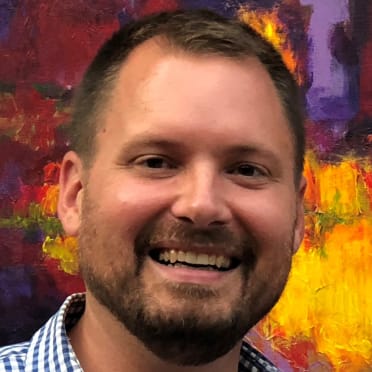
PHOENIX -- At his low point, Marco Dinges lay curled up in the fetal position in a Florida hospital bed. He had endured more than a month of sleep-deprived nights and 104-degree fevers with a disease the doctors couldn’t crack. His father remembers standing by with tears in his eyes while a nurse struggled to collect a blood sample, as if Marco’s veins had no more to give. He was skin and bones compared to how he had looked a month earlier, when he was so sure about a future as a Major League star.
Now, Marco was just trying to survive. The low point was so low that his father and aunt discussed last rites.
It was a terrible time. And with the benefit of hindsight, it was something else, too.
“A blessing in disguise,” said the 21-year-old Brewers catching prospect. “I say this a lot about my sickness: You don’t know how grateful you are for baseball until you lose it.”
More on Spring Breakout
- FAQ | Results/schedule | Rosters | Podcast
- Most loaded rosters | Best matchups | Top tools
- Prospects we're excited to see | Best moments
- 2025 first-rounders we'll see for the first time
- Spring Breakout expanding to tournament in '27
- Best moments in Spring Breakout history
- Complete coverage: 2024 | 2025 | 2026
- Watch games & highlights
Dinges is one of the hottest Brewers prospects set to play in Friday’s Spring Breakout game against the Mariners, having jumped up to No. 10 on MLB Pipeline’s Top 30 Brewers prospects list after being unranked at this time last year. His rise up the rankings continues an incredible comeback story from a hospital bed in the spring of 2023 to playing at Florida State that fall and the following spring, to being drafted by the Brewers in the fourth round in 2024, to playing for a pair of Single-A affiliates and briefly in the Arizona Fall League in 2025, to a spot in the starting lineup amid big leaguers for a Cactus League game in 2026.
His sickness is a significant part of this story, and Dinges and his family would like you to know all about it in the event it helps another family find a diagnosis.
“This is a good thing, because if we can get the word out about HLH,” said Marco’s father, Mark, “that’s what it’s all about right now.”
HLH is hemophagocytic lymphohistiocytosis, an immune disease in which certain white blood cells attack other cells and organs. It usually presents in infants or young children but can present in adults after an infection, like it did for Marco Dinges after he fell ill with mononucleosis while playing at Tallahassee Community College (now Tallahassee State) in 2023.
He’d mentioned a persistent sore throat during a telephone call with his aunt, Dr. Susan Dinges, a radiologist who lives in South Carolina. She encouraged him to get treatment and he received a diagnosis of strep throat, so he received treatment, returned to play after a couple of days and thought little of it.
But symptoms persisted. During a doubleheader in early April, Marco felt so tired and lightheaded that he was unable to play the second game. His father happened to be visiting from New England and was so alarmed when his son sweated through several changes of bedsheets. He took Marco to the emergency room and he was immediately admitted.
For two weeks, doctors sought the source of Marco’s symptoms. One of them suspected HLH and ordered a bone marrow test, but Marco did not show enough of the markers to qualify for a positive diagnosis. His aunt and uncle, Dr. William Burak, an oncologist, worked their contacts and helped get Marco to the University of Florida Health Shands Hospital in Gainesville, where the search continued. At one point, Marco improved enough to be discharged, only to crash and be carried by his father right back into the hospital.
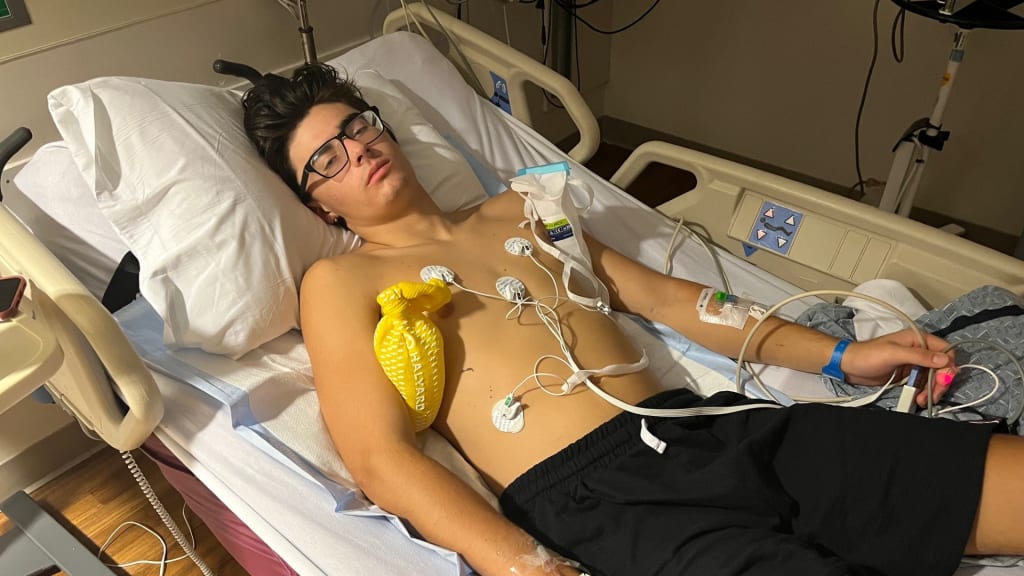
His condition deteriorated.
“I have pictures. I have videos. I have lab results,” Susan Dinges said. “He started as a healthy, 19-year-old athlete, and if you looked at his labs, you wouldn’t have thought he was alive.”
On one Sunday night in early May, Marco lay in the fetal position, pumped full of corticosteroids and other medication, when a nurse struggled to make a blood draw.
That was the low point.
“I stopped everything immediately,” Mark said. “That was a hard thing, but looking back, it was the best thing I ever did. I stood up for my son. I said, ‘No more. I need to speak to the head doctor in this hospital right now.’
“It was a real bad night. I’m going to be honest with you, I never cried so hard in my life because I didn’t think my son was going to make it to the morning.”
It was a turning point in this comeback story. The following morning, the family met with Dr. Melissa Elder, an immunologist who would become the family’s guardian angel. Marco was transferred to the pediatric wing of Shams, where the staff was more familiar with HLH. Dr. Elder put Marco on Gamifant, the only FDA-approved treatment for the disease, and within days, it appeared to be working.
“It was like watching a baseball game, every morning that would come in and post his vitals on a board,” Mark Dinges said. “With the Gamifant, everything started heading in the right direction.”
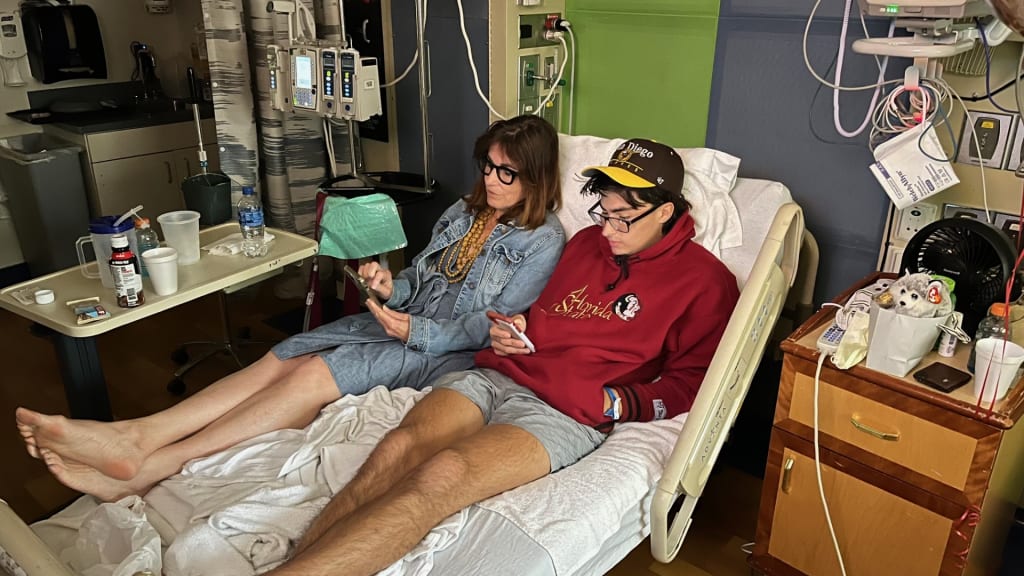
By the time it was over, Marco had spent 43 days in the hospital. His father will never forget that he brought his son back to Tallahassee on July 4, which he remembers because of the fireworks lighting up the sky.
Marco had ballooned to more than 200 pounds because of the steroids, yet was too weak to swing a bat or do a situp. For several weeks, he and his dad rose at 5 a.m. two or three times per week and traveled back to Gainesville for Gamifant infusions. In July, Marco began physical therapy to regain basic functions, the sort of simple movements he would have balked at months earlier. The therapist told him, “We have to rebuild you.”
So, he rebuilt himself. Once he had some strength, Dinges began to work out with TCC assistant coach Correy Figueroa, with dad shagging fly balls in the Florida heat. Despite everything he had been through, there was an opportunity to play at Florida State thanks to his coach at TCC, Bryan Henry, who had once starred for the Seminoles and would be inducted to the school’s Hall of Fame in 2025.
It was a leap of faith for the Seminoles to give Marco a shot, considering all he’d been through.
It was a leap of faith for Marco, too.
“I knew if I couldn’t play at Florida State, I couldn’t play professional baseball,” he said. “So I took the risk that I was going to show out.”
That’s what he did. Wearing No. 43 for his 43 days spent in a hospital bed, Dinges says he homered on the first pitch he saw that fall. He hit .323 with 15 home runs for a team that made it to the College World Series, where the Seminoles lost to eventual NCAA champion Tennessee.
“It’s an incredible story, because we didn’t think he was going to live,” Susan Dinges said. “We weren’t even thinking about baseball for a long time.”
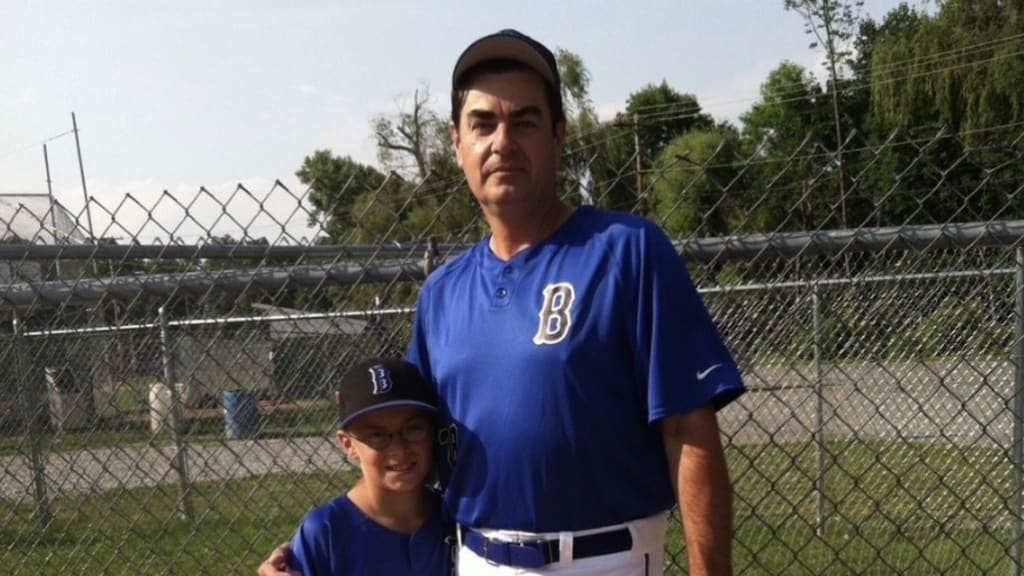
At first, Marco didn’t tell anyone about his brush with death. Baseball is a competitive world, after all, and he didn’t want to show weakness. But his aunt showed him a Facebook group dedicated to families dealing with HLH and encouraged him to consider speaking out about his comeback. When a reporter asked about Dinges’ path to Florida State, he shared the story.
“It’s awareness, it’s patient advocacy, it’s courage,” Susan said. “It’s a story that should be told.”
Marco didn’t regret it. Before a playoff game against UConn in the spring, a father, Jim Small, approached Mark in the stands and told him he’d lost his 23-year-old son Braden to HLH the previous June. Marco came over to meet the man and share some tears, then went out and hit a home run.
As he circled the bases, Marco found the family in the stands and made a heart sign with his hands. His father watched proudly.
“It takes a lot out of a parent to go through something like this,” Mark said. “I don’t really tell people this because I’m not that type of guy, but I’ll sometimes wake up at 2 o’clock in the morning like I’m still in the hotel room with him.
“But this story has a happy ending. All of Marco’s dreams have come true.”
Not all of them. Dinges said he believes he could hit in the Major Leagues right now, and knows that improving his game behind the plate is the key to unlocking that path. That will take time, since he served as Florida State’s designated hitter and didn’t really dive into catching until pro ball.
He has a fan in Brewers manager Pat Murphy, a fellow New York native who has taken a liking to Dinges. During the late innings of a recent Cactus League game, Murphy called Dinges over so they could get to know each other.
“This ain’t the final step,” Dinges said. “The final step is the big leagues, and shooting big in the big leagues. I don’t want to be an average player. It’s right in front of me. It’s right in my grasp.”