



SAN FRANCISCO -- You’ll excuse Sean Doolittle for not seeing “The Mandalorian and Grogu” yet.
He may be one of the most vocal Star Wars fans to ever grace a pitching mound, but he’s too busy writing charts and conducting meetings these days.
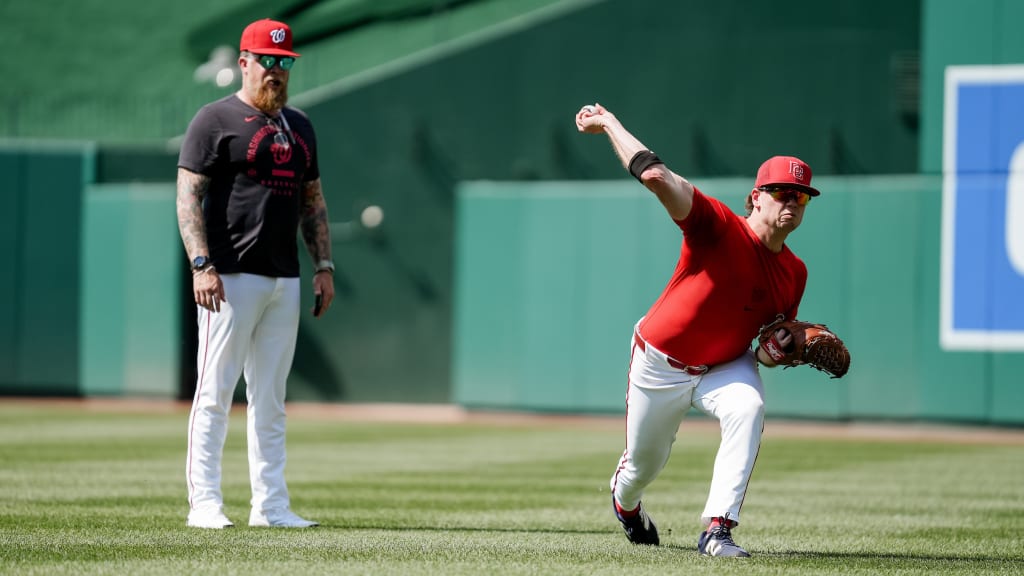
The retired 11-year Major Leaguer spends his time as the Nationals’ assistant pitching coach, a role he’s had for a few seasons on a staff now overseen by manager Blake Butera.
Doolittle expanded on his new chapter in a recent conversation with MLB.com.
Of note was the difference he recalls between his prior position as a fireballing relief pitcher for the Athletics, Nationals, Reds and Mariners, a role that earned him two All-Star nods and a World Series ring with Washington in 2019.
“The No. 1 difference is that I'm thinking of 13 to 16 different guys at one time, maintaining ongoing conversations I'm having with all the guys when I’m advancing the other teams," expounded Doolittle. "I’m looking at it through the lens of how each one of our guys is going to fare against this guy, that guy, trying to put a game plan together.
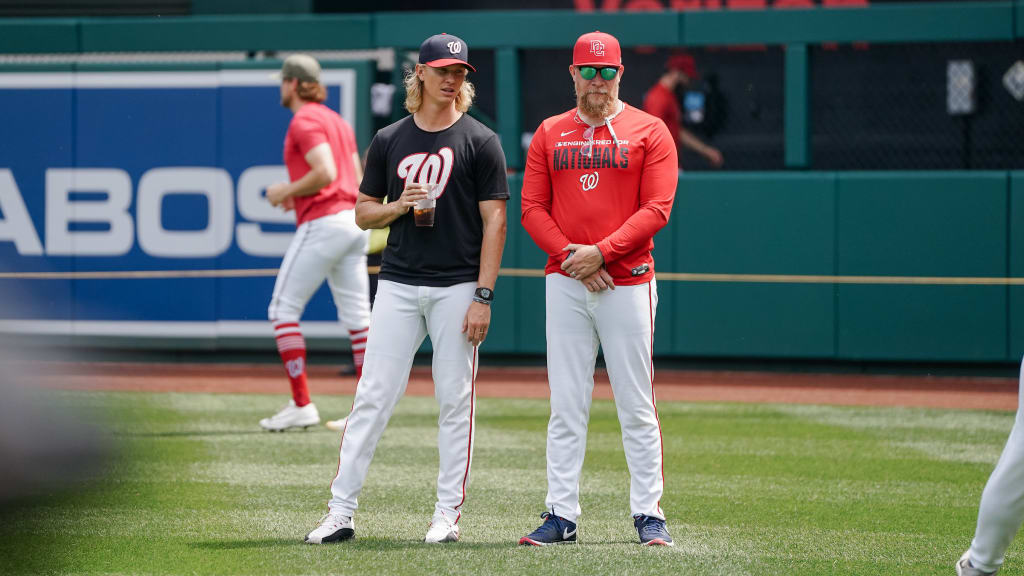
“Before, one of my favorite parts of the game was the preparation work, the daily routines in the weight room and training room and watching video. That's where I got a lot of confidence from. Now, that's still a huge part of my day, it's just for the other guys instead of myself.”
But when Doolittle hung up his playing spikes in 2023, he didn’t exactly have a plan in place to extend his time around baseball. It just kind of happened.
Partial credit for that goes to Doolittle’s wife, Eireann Dolan.
"It was the day that I had a little retirement ceremony at Nats Park and they gave me a nice send-off. [Former general manager] Mike Rizzo came to me and said they had something in mind for me, but he was like, ‘Go home, enjoy life away from baseball for a little bit, but keep it in mind.’
“And I started driving my wife crazy three months into the offseason. She was like, 'You should really call him about that job,’ and it ended up kind of morphing into the role I'm in now as an assistant, trying to use a little bit of my experience. But I've also tried really hard to learn a lot about analytics and pitch design, seam orientation, different things like that.”
That’s why Doolittle hasn’t had time to catch up yet with Baby Yoda or “Andor” on Disney Plus, as much as he'd like to.
Turns out, there’s a lot more downtime as an active player than there is as an assistant pitching coach. All that time in the air or on the bus or in the hotel that was previously perfect for streaming apps and entertainment is now taken up by charts and gameplanning.
Watching pitchers like Gus Varland seal the deal out of the bullpen is the sort of thing that makes it all worth it.
“We try to break our meetings up into smaller groups, and we even have some individual meetings to try to tailor it very customized to small groups of guys, so that some of our righties don't have their eyes glaze over when we’re talking about a lefty approach or something like that," Doolittle said. "But just to have us bring them something before the game and say, ‘If you execute this like we know you're capable of doing, it’s going to work.’
“And then they go out and maybe in the big spot, they do it, and it works, I get so excited for them. I think it's huge for our relationship, it continues to build that trust between the two of us.”
Doolittle spoke of the effort to make these daily meetings “sticky,” so players don’t allow them to fall into the realm of the mundane.
“I can still use my experience, but I've also tried really hard to develop as a coach and not have my experience be the only thing I'm bringing to the table,” he added. “With these guys, I can only tell them about ‘back in my day’ so many times before they're just like, ‘Shut up.’
“I'm not the one out there competing anymore. And I don't have kids, but I imagine that's what parents feel like. I’m in the dugout and I get nervous for these guys, because I want it so bad for them. I'm wearing my heart on my sleeve.
“I'm out there when they're pitching and I have an idea of what they're thinking, what they're feeling and what they're going through. So when they're able to make an in-game adjustment, execute the game plan, it just fires me up so much.”
Given Doolittle’s journey from a Minor League hitting prospect in the A's system to an All-Star reliever with an exuberant personality who was a favorite in each city he called home, it’s all about paying it forward.
“My goal was I wanted guys to have the opportunities that I had, to feel the support that I felt like I had in my career," he said. "I played for a lot of really good coaches and I had the career that I had because of the veterans I was around, coaches that just kept giving me the ball and said they trusted me and believed in me. I got second, third opportunities, I got to play in a couple All-Star Games, I got to play in a World Series.
“I want that for guys.”