



MILWAUKEE -- The Brewers’ television crew will have a new toy for Friday’s series opener against the Yankees: The Ump Cam.
You’ve probably seen the technology in use at the All-Star Game or in the MLB postseason -- a tiny camera attached to the umpire’s facemask that brings viewers right down to home plate. If Friday’s plate umpire is amenable, it would mean fans can experience one of Jacob Misiorowski’s triple-digit fastballs from little more than 60 feet away.
“At All-Star Games and World Series, they put those things all over the place. But that has not been the case for regional television,” said Jeff Levering, the Swiss Army knife of the Brewers’ broadcast crew, who moves between play-by-play on TV and radio. “It has opened the door for a lot of really cool things.”
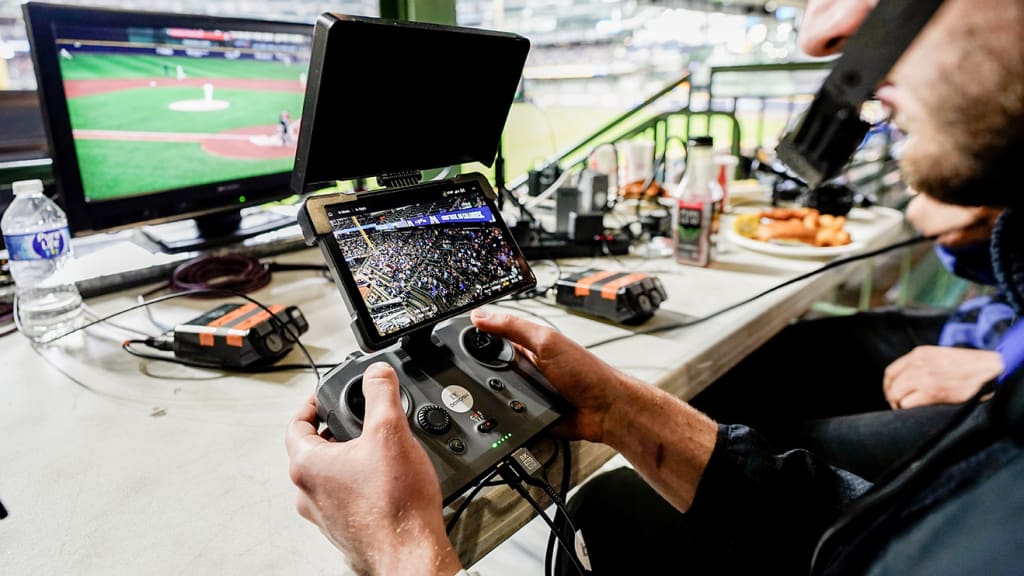
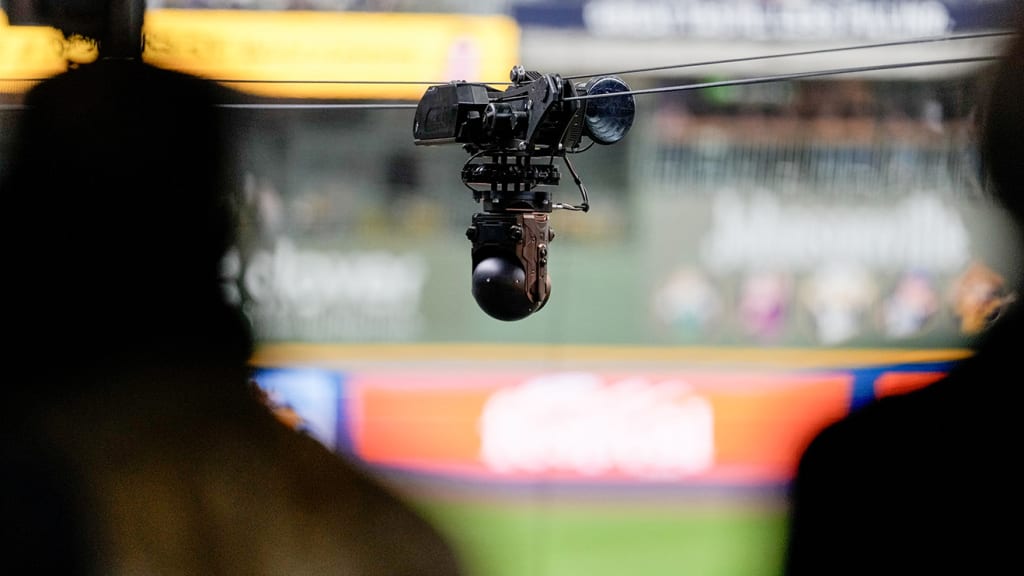
Brewers telecasts are leading the way in cool things this season with the transition from the regional sports network model to MLB producing and distributing games. According to the club, the Brewers will be the first MLB team to employ all four of the technologies on offer in a regular season game:
- Wire Cam running along the foul lines
- Drone Cam flying above
- Dirt Cam in front of home plate, aimed up to the batter/catcher/umpire trio
- Ump Cam from the perspective of the umpire calling balls and strikes
“It doesn’t change the foundation of what we’re trying to do, which is following the stories and covering the game,” said play-by-play man Brian Anderson, who has the TV call for the Yankees series. “If anything, it’s given us a shot of life. The same kind of enhancements you see on postseason games have not been available to us in the local markets until now, and that’s fun.
“Our directors, John Walsh and Lindsey Plosejz, they get to think about coverage in a whole new way. It’s given all of us a shot of life.”
Anderson has experience in how those enhancements can boost a broadcast. He’s been calling postseason baseball since 2008, in addition to other national work – including the NBA Playoffs, March Madness, the NFL, PGA and even tennis, beginning with last year’s French Open.
What the Brewers and MLB are calling Ump Cam, Anderson knows as “Mask Cam” from his work on TBS and TNT, since what he first knew as Ump Camp was affixed to an umpire’s chest like a body camera. That setup worked beautifully for officials in basketball but wasn’t good for baseball, because as a plate umpire crouched behind the catcher, he inevitably angled the camera downward to the ground. It wasn’t good TV.
An umpire’s mask proved a much better perch, and that’s not a new idea. The first umpire to wear a mask-mounted camera was Frank Rizzo in the 1985 Little League World Series for ABC’s Wide World of Sports. The camera was tiny for its day, but Rizzo wore so much transmission equipment around his waist that he looked like a walking satellite truck.
Even as cameras got smaller and smaller, and wireless transmission improved, it was too clunky.
“There was no way you were going to get Major League umpires to wear that,” Anderson said.
Now, the technology has arrived.
Umpires still do need to agree to wear the device, which isn’t compatible with the hockey-style masks worn by some catchers and umpires these days, but has been honed to work well with the more traditional masks.
“These guys are really particular and professional about it, just like a batter would be about the feel of his bat,” Anderson said. “When you change the weight and balance of that mask it can be somewhat distracting to an umpire. They tried to counterbalance it so it’s as comfortable and seamless as possible. The umpire just forgets it’s on.
“I think a lot of the umpires like it. When you’re watching a game with the strike zone square and a pitch dots the corner, it looks easy. It’s like, ‘You think it’s easy? Here, see what it’s like when you don’t have all that stuff.’ I think this camera validates their incredible skill.”
Anderson hopes that Friday’s home-plate umpire is amenable to wearing a camera. If he declines, Anderson will introduce fans to the rig from the booth.
As the season goes on, the Brewers will employ it in-game as much as possible. Rather than starting by finding sponsors to pay for all of this new tech, Brewers president of business operations Rick Schlesinger adopted a policy of paying for everything upfront, then finding sponsors once the club can show how effective the features can be.
“That’s where this sport is so different from other sports,” Levering said. “These different camera angles can open your eyes to what’s actually going on all over the field when you’re watching one thing. So many things are happening at the same time.”
The future is a blank canvas. For more information about where to find Brewers.TV or to subscribe, fans can click here.
“We’ll get to the point soon where a fan can watch a game and take whatever camera they want,” Anderson said. “Right now, it takes up too much space. But we’re getting closer to the time a fan could watch the whole game from Mask Cam if they want. I do think that’s coming.”