


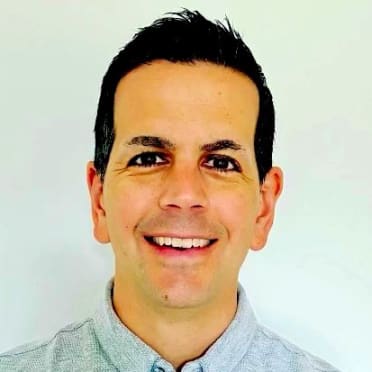

Tony Vitello might be first. But he’s also fate.
When the Giants made Vitello the first college head coach to go directly to managing an MLB team earlier this offseason, people understandably described it as a shocking, sea-changing move. And people are justifiably curious to see whether Vitello, who won a national championship and two SEC tournaments at Tennessee, will be able to win over a Major League clubhouse.
But as strange as the Giants’ hire of Vitello may seem, it can be argued that it was an inevitable outcome in a baseball industry that is increasingly cohesive and in a developmental environment that has been rapidly accelerated.
“I wish there was somebody, like, with a shorter haircut and is more reputable up here to say it’s time for college baseball and Major League Baseball to be married closer,” Vitello told reporters at the Winter Meetings. “I think working together ultimately makes Major League Baseball a better product, which is great for fans.”
The college game Vitello left behind and the Major League game he’s entering have never been more closely intertwined.
Though Vitello has broken the mold as a manager, we have seen coaches come from the collegiate ranks. The Brewers’ two-time NL Manager of the Year, Pat Murphy, broke into professional baseball (first as a special assistant, then as a Minor League manager, then as a Major League bench coach) after a long head coaching career at Notre Dame and Arizona State. The Twins poached Arkansas pitching coach Wes Johnson in 2019, only for him to leave to become the pitching coach at LSU in 2022. The Tigers hired former Michigan pitching coach Chris Fetter in 2020.
It's not just leadership roles that connect the NCAA and MLB, though. It’s also the technology and facilities that are bringing more polished college Draft picks into affiliated systems, where some have skyrocketed to stardom in the bigs.
Reigning NL Cy Young winner Paul Skenes of the Pirates was, famously, starting for LSU in the College World Series one year and for the NL All-Star squad the next.
A’s first baseman Nick Kurtz bashed his last baseball for Wake Forest in 2024, then bashed his way to the AL Rookie of the Year honor in '25.
Trey Yesavage had only 25 Minor League appearances separating his tenure at East Carolina from his triumph on the 2025 World Series stage for Toronto.
Special talents? Sure. Extreme examples? Maybe. But there were eight players who debuted in the Majors in 2025 after playing college ball as recently as '24 and another 18 who had played in college as recently as '23.
So something significant is going on here.
“The college game is becoming closer and closer to a very high level of Minor League Baseball,” A’s manager Mark Kotsay said. “You can identify guys on the LSU pitching staff that you could probably just put into a [Major League] bullpen, and they'd get through an inning, for sure, because they're all throwing 97-plus [mph].”
Added Angels general manager Perry Minasian: “You go to any SEC school, and it's not just Friday with their top starters, right? It's Saturday, it's Sunday. They have guys coming out of the 'pen that are throwing with significant velocity -- and not only with the fastball, but breaking balls, too. So the [difference in the] speed of the game might not be as drastic as it once was.”
College players are matriculating to the Majors quickly in part because of the improved tools available to them in the NCAA.
Like so many things, it comes down to money.
For one, college teams are making larger investments in their coaches than ever before. According to Baseball America, the top 15 highest-paid college coaches are all well north of $1 million per year, with LSU coach Jay Johnson recently inking a landmark deal paying him over $3 million annually.
More money has also been funneled to pitching and hitting coaches, ensuring some of the top instructors in the nation are working with collegiate players.
“I didn't have a hitting coach at Santa Barbara,” new Rangers manager Skip Schumaker said with a laugh. “Like, I didn't have one, let alone three or whatever.”
Added Reds manager Terry Francona: “In the SEC, the coaches are making more than our coaches.”
So the college coaches are better than they used to be, and so are the facilities.
When the Blue Jays were plotting what has become known as a jewel of a Spring Training facility in Dunedin, Fla., they toured the setups at Wake Forest and Vanderbilt, among others, to get ideas on how best to implement innovation that provides objective data on movement patterns, deliveries and swing mechanics.
“It was modeled in so many ways after the college programs,” Jays manager John Schneider said. “[Team president] Mark [Shapiro] and his team were going around to colleges and soccer facilities, football facilities and saying, ‘OK, what are we missing?’ So we were trying to play keep-up, in that regard. I think that we've had so many young guys coming from college that come into our state-of-the-art facility, and it's normal to them. I think that that's where the competitive advantage kicks in.”
A pitcher like Yesavage has had tools to assess his velo and spin for years. Same with Kurtz and his access to swing-path data.
So while they might be special raw talents, they are also informed enough to more quickly assimilate to the Major League level.
“They hit the ground running,” Kotsay said.
It’s something clubs will keep in mind as they approach the 2026 MLB Draft, in which UCLA shortstop Roch Cholowsky is the No. 1-rated prospect by MLB Pipeline.
“You can do more trial-and-error type stuff in college programs, so that coaches are able to build these unique skill sets,” Guardians general manager Mike Chernoff said. “And then, when players get invested in it, they can sort of scale that out. And I think we have seen that, because there maybe aren't some of the same barriers that used to be in play.”
The acclimation is also made easier by the relative youth of modern MLB rosters, especially on the batting side. According to data on Baseball-Reference, at the start of this century, the average position player age in MLB was 29.1. This past season, it was down to 27.9.
In the pitch-tracking era (since 2008), data shows that batters under the age of 30 took 59% of plate appearances at the MLB level in 2008 and 66.2% last season.
So dugouts and clubhouses are younger and, if we can be permitted to generalize, perhaps more energetic and welcoming places than they once were.
“There's less of the old-school, earn-your-stripes rookie stuff,” Murphy said. “There's less of that nonsense.”
New Orioles manager Craig Albernaz came from his role as bench coach of a Cleveland club where the average age of a player on the roster in 2025 was 27.2.
“I described Cleveland’s dugout as like a college dugout,” Albernaz said. “That’s so much fun, because baseball's fun, you know? And I think that's the best part of it. And it also keeps your own players accountable, where you have that culture of everyone having fun and talking [smack] to each other. It just kind of keeps everyone in check. You know, at the end of the day, when you show up to play baseball, it should be fun.”
Take all of this in tandem, and a hire like the Giants made feels less revolutionary and more evolutionary.
Murphy said he would not have been ready to go straight from Arizona State to managing in the Majors when he came to pro ball in 2010.
He thinks the game is in a much different place now.
“I don't think that's going to be an issue at all,” he said of Vitello’s transition.
The 2026 season in San Francisco might tell us a lot more about how strong the link between the college game and the Major League game is. But Vitello said he wants to see that connection grow, and he doesn’t see himself and his Giants gig as the only way it can.
“Smarter and more responsible people than me can come together and join some ideas,” he said. “But I really think they can feed off each other.”