

This Q&A is excerpted from an interview for the New York Yankees Official Podcast. Subscribe at yankees.com/podcast or the podcast platform of your choice, or watch every episode on the Gotham Sports app or MLB.com.
One of the things that makes baseball so unique is the consistency contained alongside the variables. Thirty teams spread around the country play in different shaped stadiums, each with its own character, but at heart, it’s still 90 feet to first, three outs to an inning. Get 27 outs and you’re a winner, whether in Boston or San Francisco. Pitch the last three outs, and you’re in a special class.
Still, it’s silly to pretend that everything on the field is the same everywhere. The pitcher’s mound at Pittsburgh’s PNC Park might be the same height as the rubber at Yankee Stadium, but the job of closer for the Pirates just isn’t the same as the role in New York. Forget about the fact that the gold standard for the position, Mariano Rivera, closed things down for a generation comprising some of the greatest Yankees teams of all time. There’s also something to be said for the immense gravity of nearly every game the Yankees play.
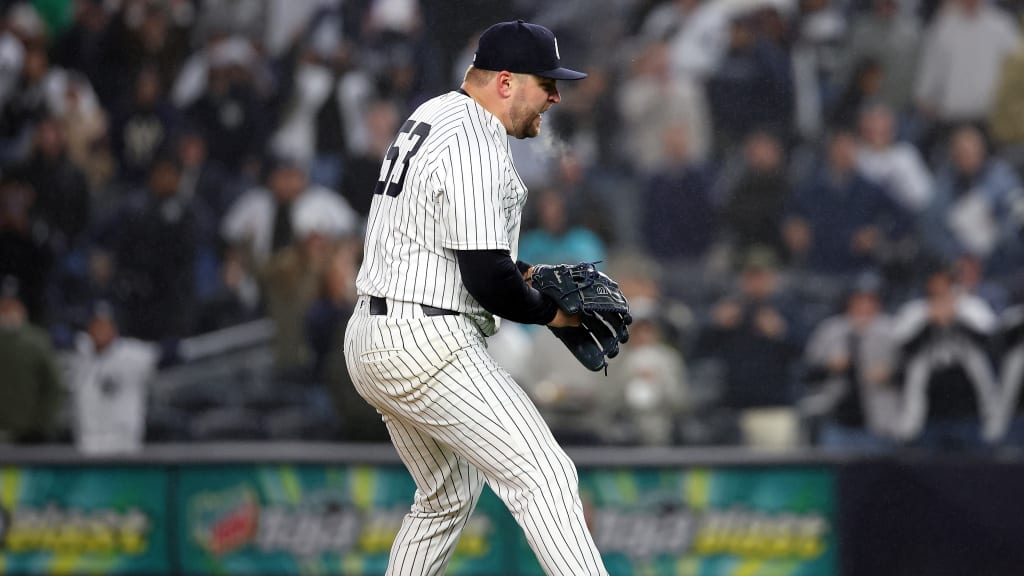
David Bednar came to New York at last year’s Trade Deadline, leaving a Pirates team that he had grown up adoring and immediately getting thrust into high-leverage situations for a team chasing a World Series title, a goal that only ever existed in a theoretical realm during his time in Pittsburgh. As he settled into his first full year as a Yankee, from Spring Training through the season’s first weeks, Bednar embraced everything about his new digs, from the Hall of Famers around every corner to the pinstripes that look even better in person to the realities of spending every minute positioning himself to be the guy throwing the last out of a World Series clincher.
During a break from the preparation, the closer took some time to talk to Yankees Magazine deputy editor Jon Schwartz about the thrills that lie ahead, and the comfort with which he approaches them all.
Yankees Magazine: You got traded here in the middle of last season, leaving a Pirates team that was languishing in the bottom of the division, bottom of the National League. How much adrenaline does something like that give you?
David Bednar: I mean, quite a bit. You’re just thrown right into the middle of a pennant race.
YM: Different situation.
DB: Yeah, absolutely. And it was a whole lot of fun.
YM: Obviously, it’s not easy pitching and especially closing for a team that’s scuffling. But when you look back at your time in Pittsburgh, is there a memory or a moment that really sticks out to you?
DB: There’s just so many. I was fortunate enough to play for the team I grew up rooting for. And just all the ties, and having all the family come and support me, and to play right in front of everybody who supported me throughout my whole career, my whole life, the whole thing was just so special. So, I don’t think I can pick just one or two, but being able to play for your childhood team, there are obviously a lot of pinch-me moments.
YM: I think a lot of people don’t realize how sneaky fun of a city Pittsburgh is, too. And my favorite thing about it is everything’s black and gold. You know exactly where you are at all times. It’s the only city, I think, where all the teams have the same colors. That must provide a nice sense of identity to the people there.
DB: Absolutely. I think everybody identifies with the sports teams, and it’s the blue-collar, gritty mentality.
YM: Any big leaguer was probably a stud growing up. You go to college, you play in the Minors, all this competition keeps on rising, right? When did you know, as you were watching the competition level rise, that you were rising at the right level with it?
DB: It probably wasn’t until I got to Double-A and realized, “Oh man, I might be knocking on the door here.” I go back to being in college and thinking, “Man, is being drafted even a possibility?” And then the same deal once I got drafted; I didn’t really have many expectations.
YM: At the risk of sounding rude, you’re a 35th-rounder out of Lafayette. That doesn’t scream, “Stop everything and get a load of this guy!”
DB: No, not at all.
YM: How do you go from that to an All-Star in a couple of years? Because 35th-round picks don’t get a very long leash. If anything goes wrong, teams cut bait pretty quick.
DB: I think it was just selling out to get better each day, and then kind of putting your head down and working. And then when you look up, it’s amazing how far you can come. I’m also very fortunate to have a lot of awesome people in my corner supporting me, and they’ve all helped me along the way.
YM: A high school kid drafted in the 35th round probably just goes to college. For you, after the Draft, how committed were you at that point to saying, “We’re going to chase this, we’re going to figure out what’s going on here?”
DB: I remember the summer before, I played in the summer league in the Carolinas. And I saw some of the guys that were a year above me get drafted, and I was like, “This is kind of a real possibility.” So, that’s really where that all started.
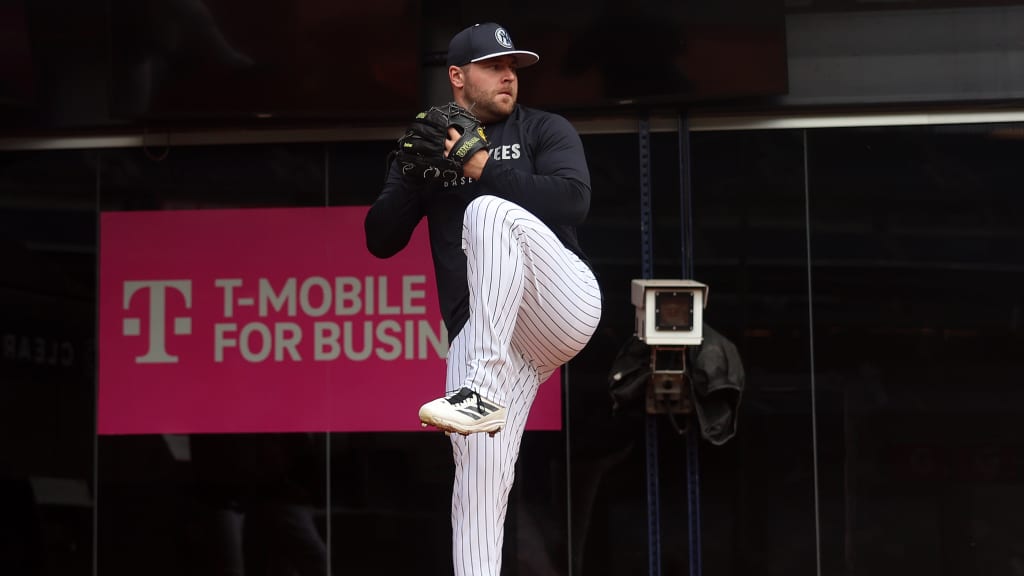
YM: Let’s go to the Trade Deadline last year. There’s a lot of rumors, a lot of stuff going on. The Yankees bring in several relief arms. Where were you mentally in the month leading up to that?
DB: As good as I am at trying to avoid all the noise, I think that you can’t really block it out. It’s kind of all over the place. You see the writing on the wall, in a sense. But at the end of the day, I was happy with myself for not getting too involved or too wrapped up in it because you can’t do anything about it. It’s completely out of your control. And that’s one thing I’ve learned throughout my time, is just controlling what you can control. It’s a cliché for a reason.
YM: Your first game as a Yankee ... not so awesome.
DB: Unbelievable.
YM: We can laugh now because it’s a while ago. But all the new pitchers who came over in the deals -- you, Camilo Doval, Jake Bird -- come into the game, and you all struggle. Is it almost comical -- even in the moment, as annoyed as you are -- that you all go through that together?
DB: You want to do your best to make a good first impression, and instead, we’re getting off on the wrong foot. So, yeah, definitely not the way we all intended for it to start.
YM: You’re a proud Pittsburgh fan, Pennsylvania native, you pitched at Lafayette. You get drafted by San Diego -- that’s a pretty far ways over there, but there are also worse places to be to start your pro career. What were your thoughts on the Padres at that moment, and how excited were you to see things develop there?
DB: I think from the jump, I was more excited just for the opportunity in general, just trying to make the most of it.
YM: But then you get traded to Pittsburgh. When you get there, is it almost like another big league debut? You’d already done it, but at the same time, now you’re pitching at home.
DB: Absolutely. Growing up, you see all the black and gold, you see the Pirates jerseys everywhere, and then to be in that first big league camp and everybody’s wearing Pirates stuff, I felt a little bit more at home. It was so cool walking through the tunnel and getting to the clubhouse for that first time, just walking out on the field, looking around and seeing all the seats where I remember, “I’ve sat there for this game ... there for this game.” It was just very surreal.
YM: Was there, maybe it’s not a specific moment, but a point where you notice, OK, I’m actually comfortable here now.
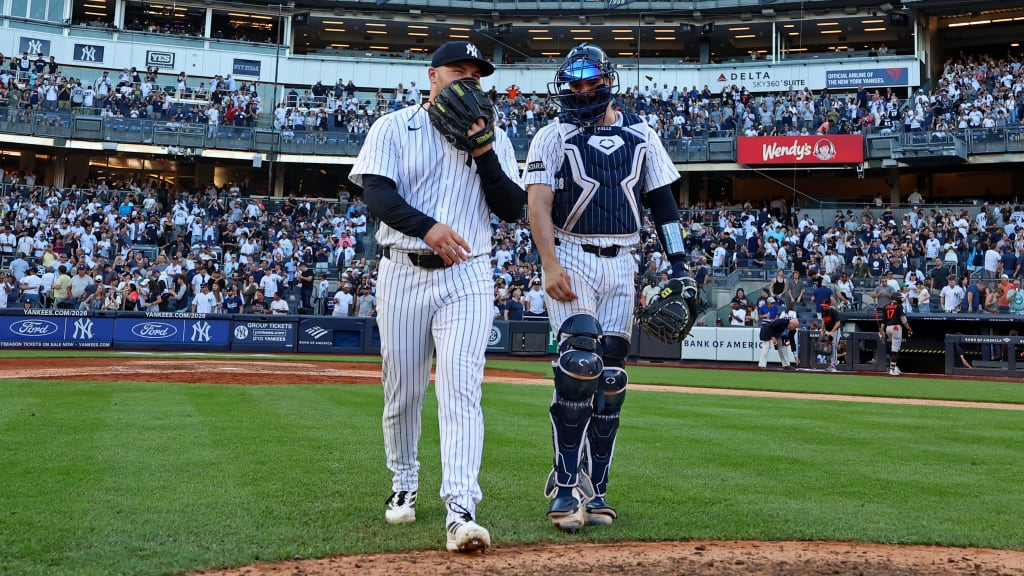
DB: That first week, we were on the road; we went from Miami to Texas, and it was still kind of like drinking water out of a fire hose. It wasn’t until a couple of days into New York and getting settled in the clubhouse and getting to put on the pinstripes, which was just so special. It re-energized me a little bit.
YM: What are some of the early things that make you realize that this place is different?
DB: It’s the expectation of winning. And not just, “Let’s get into the playoffs.” It’s the expectation of a World Series. That’s the goal. Everything else is a failure. It’s cool to see everybody carry themselves to that standard, and it’s been awesome to be a part of that. The history of the New York Yankees is so special. You just think about all the players that have come before you, and on Old-Timers’ Day, it was unbelievable. Some of the names, some of the legends. It’s so impressive to now be a part of that group that has worn the pinstripes.
YM: One thing the Pirates do really well is they have a lot of their greats come back during Spring Training, and players who play for the Pirates feel a real connection. You come to Spring Training this year, and suddenly all these Yankees legends are around. Hall of Famers. Is your head on a swivel? Is it like, Who’s here now?
DB: You’re starstruck a little bit. I go back to when I played in the WBC in 2023, Andy Pettitte was the pitching coach, and I remember thinking the same thing: Holy cow, it’s Andy Pettitte! And now when I got traded, seeing him around, he was just a familiar face. Getting to have a relationship with him is really special because he couldn’t be any nicer of a human being.
YM: You mentioned the World Baseball Classic. Both 2023 and this year, the last game didn’t go the way you wanted it to, but the overall experience, is there anything you could compare it to?
DB: The experience as a whole was just so special. And I don’t think there’s anything to compare it to because, over the course of 162 [games], baseball is a marathon. And then even the playoffs, it’s three-game series, five-game series, seven-game series. And [the WBC] is just a seven-game sprint to the championship. It’s a two-week tournament, and you get the passion of people playing for their countries. You definitely feel it. It’s an amazing brand of baseball.
YM: You’ve been to a pair of All-Star Games, and that’s really special, but the experience is being dragged from one place to another with no time to breathe and really get to know the guys. How special was it to be around those studs on Team USA for two weeks?
DB: Getting to know those guys and to see how quickly everybody came together was something I’ve never seen before. Especially when you have a room full of superstars. Everybody was pulling the same direction, wanted to win. We had that pride of playing for your country.
YM: Looking back to 2023 and also this year, does the WBC experience have you more prepared for the season to start? More engaged, maybe?
DB: Absolutely. You can’t replicate pitching in that atmosphere. I don’t think there’s a better way to get ready for a season.
YM: We know Aaron Judge is the captain in the Yankees’ clubhouse. Who’s the captain in the bullpen?
DB: I think it’s a real collaborative effort. That’s what makes it a good environment, good group. I think we have a really talented group, we have a lot of good guys down there, and I’m really excited to get to work with these guys.
YM: Last year, coming over at the Deadline, it’s a sprint to the finish. This year, starting fresh, how excited are you to go March to October with this group?
DB: Very much so. It’s an incredible group of guys, incredible clubhouse, incredible staff, fan base, the whole thing. It’s a special, special place to play. And like I said before, the World Series is what you have your sights on. It’s a really cool thing to come into spring training with that goal. It’s going to be a lot of fun.
This interview has been edited for clarity and length.
Jon Schwartz is the deputy editor of Yankees Magazine. This story appears in the May 2026 edition. Get more articles like this delivered to your doorstep by purchasing a subscription to Yankees Magazine at www.yankees.com/publications.