


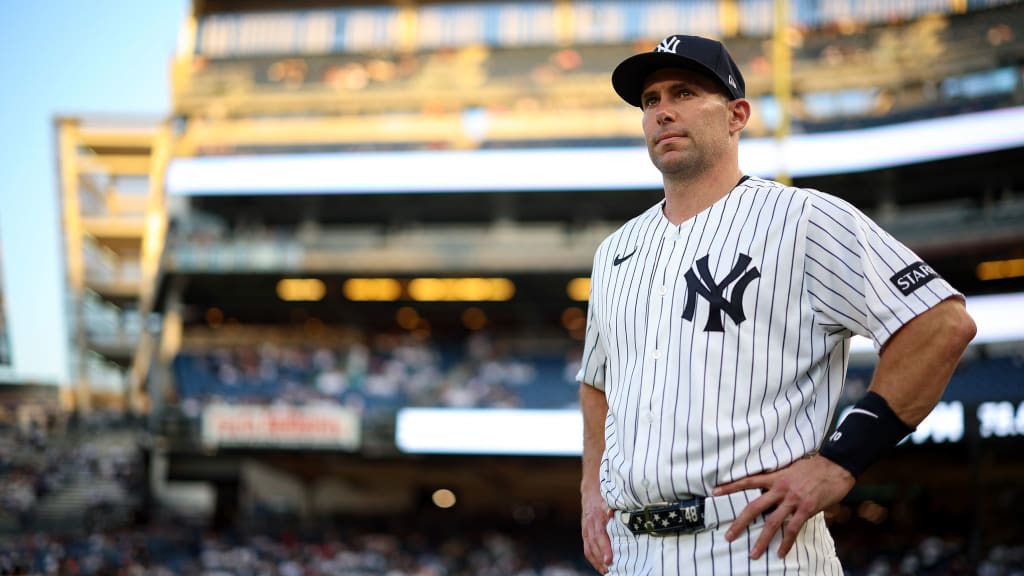
Paul Goldschmidt said it last summer, almost casually. It was close to Father’s Day, and the veteran first baseman was standing in front of his locker, discussing what it meant to have his children roaming around Yankee Stadium.
“I know this isn’t going to last forever,” Goldschmidt said.
He was talking about the clubhouse visits, the summer afternoons spent playing on the outfield grass. The opportunities to have his son, Jake, take ground balls at second base, or to watch his daughter, Emma, light up when Aaron Judge would greet her with a fist bump.
Goldschmidt has been around long enough to understand that no matter how impressive a player’s stat line may be, the uniform eventually comes off. So, he found a way to make the magic last a little longer.
“I know he talked a lot about if he was going to come back, if he was going to sign,” says Yankees captain Aaron Judge. “Then he comes back this year, and he’s hitting around .290, you’re going to hopefully see [more than] 20 homers -- it’s just impressive to see.”
Goldschmidt’s resume hardly suggested a player who needed to explain himself: seven All-Star selections, four Gold Glove Awards, five Silver Sluggers, the 2022 National League Most Valuable Player Award and nearly 400 home runs. “He’s obviously a future Hall of Famer,” Cody Bellinger says.
At first, wearing pinstripes offered Goldschmidt an opportunity to prove he could still play up to his own expectations, rebounding from a 2024 campaign with the St. Louis Cardinals that he described as below his standards.
Then he experienced everything the Yankees are about: the clubhouse culture, the professionalism, the never-ending expectation of winning. Not only did Goldschmidt embrace all of that, but he also became a key part of it, described by manager Aaron Boone as “an amazing force with our team and our culture.”
When the 2025 season ended with the Yankees ousted from the American League Division Series by the Toronto Blue Jays, Goldschmidt stood in the center of the clubhouse and said he wasn’t ready to go home. In the moment, he meant the playoffs. Looking back, it also sounded like something larger.
“I wanted to play,” Goldschmidt says. “I loved playing last year, and I was able to play well enough that teams were going to want me. I had fun and my family enjoyed it, and those were the main things. I still had an enjoyment and a hunger to get better and to win.”
Then the phone didn’t ring until January. The offer that came from the Yankees was modest by veteran ballplayer standards -- one year at a reported $4 million -- a fraction of what he had once earned annually in St. Louis. There was no sales pitch and few promises.
Goldschmidt understood why: The Yankees envisioned Ben Rice as an emerging star, and they aimed to give him more playing time at first base. Giancarlo Stanton was healthy at the time, expected to occupy the designated-hitter spot. Goldschmidt would be a reserve, waiting in the wings.
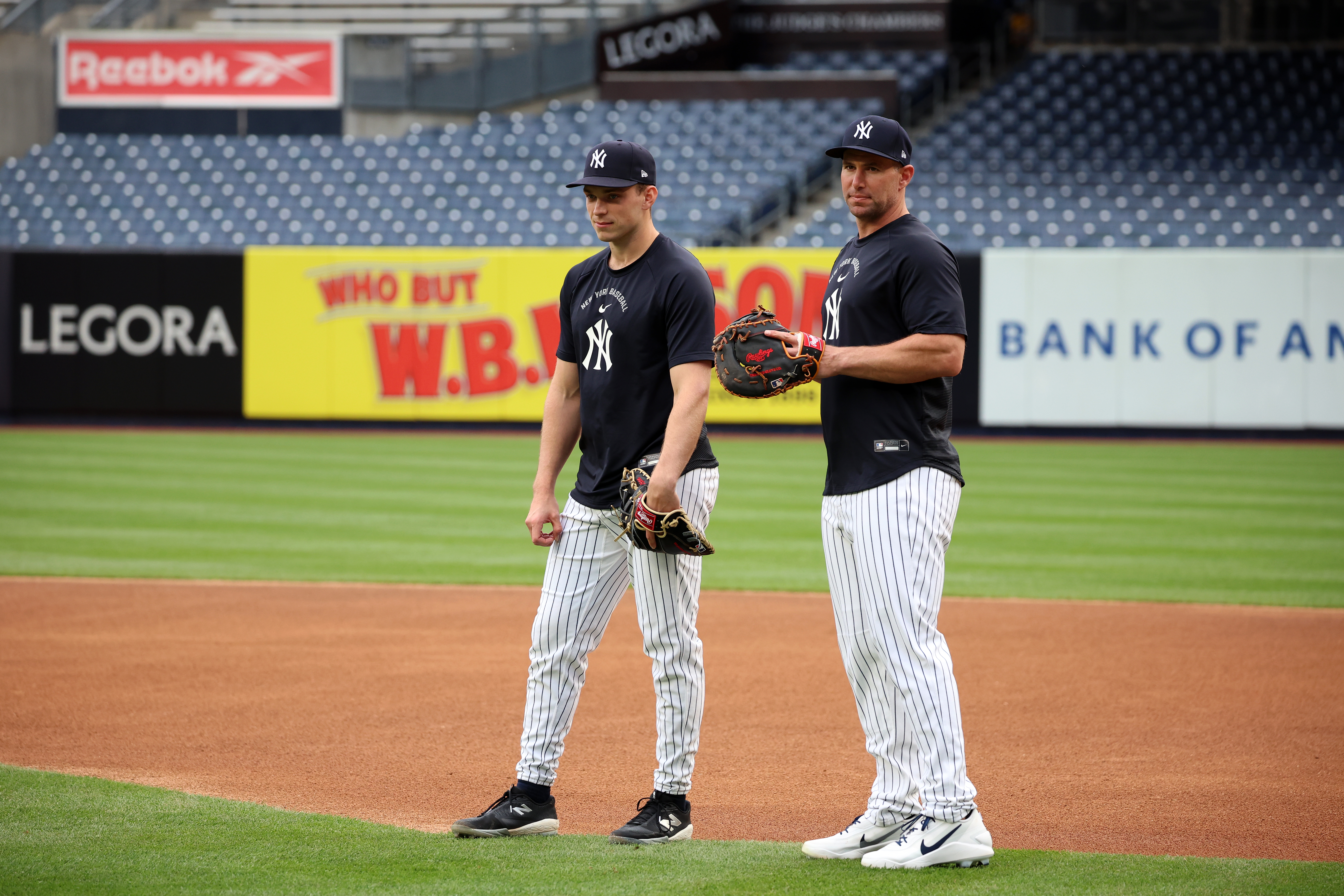
It was not a glamorous assignment. He accepted it anyway.
“I knew this wasn’t going to be a place where I’d be playing every single day unless somebody got hurt,” he says. “Even when I wasn’t playing that much, I was still having so much fun showing up every day with the guys. I still enjoy playing and especially being around this group. I just love these guys.”
From the Yankees’ perspective, Goldschmidt represented a smart insurance policy. They could count on him to provide presence, but more importantly, general manager Brian Cashman wanted to stack the roster with proven right-handed bats to avoid an overly lefty-heavy lineup susceptible to southpaws.
That fueled their desire for a similar reunion with infielder/outfielder Amed Rosario, who signed around the same time. With Goldschmidt, Boone said they were betting that what they saw from him throughout long stretches of 2025 would continue this season.
“We felt really good that he was going to still really handle left-handed pitching,” Boone says. “We knew Goldy would fit that mold, coupled with the fact that he’s as good a teammate and a person as you could want. That was attractive, too.”
Blueprints sketched in February and March rarely play out as scripted. Stanton limped off the field in Houston in late April, having sustained a right calf strain while jogging between first and second, then suffered a setback while rehabbing in June. Suddenly, the Yankees could offer Goldschmidt more playing time than initially thought.
After logging just 28 at-bats in March and April, the 38-year-old was rested and ready to become -- as Boone called him at the time -- “a massively productive” force. Goldschmidt belted five homers with an .890 OPS in May, then helped carry the lineup after Judge landed on the injured list in early June, slugging eight homers and driving in 22 runs with an .885 OPS that month.
“It’s why we signed him in the first place, and why he wanted to come here,” Judge says. “Especially when some of us are down -- me, Stanton, some of the pitchers -- having a guy like that, a former MVP who can step in and lead this squad, it’s been very fun to watch.”
“He’s been one of those guys that really stepped up for us,” says Boone. “Even on those nights where it looks like they’re having their way with him a little bit, he puts together an awesome at-bat. His experience and excellence allow him to make the little adjustments he needs to make within the game.”
One highlight came on June 24 at Detroit’s Comerica Park, when Goldschmidt launched two homers off then-Tigers ace left-hander Tarik Skubal, the kind of opponent against whom Derek Jeter used to say that no one would be “running to the bat rack” to face. No one except Goldschmidt, perhaps.
That night, Goldschmidt improved to 7-for-13 with four career homers against the winner of the last two American League Cy Young Awards. (Though, it should be noted, Skubal held his nemesis hitless in three at-bats a week later.) Asked what might be behind that success, Goldschmidt shrugged and said, “I have no idea.” Jasson Domínguez, who also homered in that June 24 game, might have a more forthcoming read on the situation.
Around that time, Domínguez nodded approvingly toward Goldschmidt and revealed that he had been privately calling his teammate “Young Goldy,” remarking, “He’s still got it.” Goldschmidt laughed when reminded of the nickname, saying he took it as a compliment.
So, the question was posed: Does Goldschmidt feel young?
“Sometimes,” he says, smiling. “Sometimes not, but I feel good enough to go out there and play. I think I probably do some things better than when I was younger, through experience, and some things not as well. I just try to be the best I can every day. I try not to hold onto the past.”
The potential for a World Series championship was an obvious draw in Goldschmidt’s decision to return to New York, the one laurel missing from his impressive trophy shelf. But Goldschmidt never framed chasing a ring as his driving reason for signing that one-year deal.
Mostly, he is back because he enjoys the work, loves the room and believes he can help. He recalls his father, David, repeatedly telling him, “It’s got to be about the team. It’s not about you.”
“That’s just been ingrained in me, I guess,” Goldschmidt says.
Goldschmidt’s contributions have come in many forms. As Rice earned his first career All-Star selection this year, tabbed to represent the American League and participate in the Home Run Derby during the mid-July festivities in Philadelphia, he credited Goldschmidt as one of the influences who helped punch that ticket.
Rice describes Goldschmidt as an “awesome” resource, especially when it comes to peppering the veteran for nuggets of defensive wisdom.
“One of the first conversations we had about it was that, ‘Hey, people view first base as, Just stand over there and catch it, but there’s a lot that goes into it,’” Rice says. “I think that comes out in the conversation we have when we’re talking about the little details -- posture, picks, footwork. That speaks to who he is, too. The reason he has had such a successful career is because he pays so much attention to the little things.”
According to Rice, one of Goldschmidt’s reminders echoes in his mind whenever he sees a chopper come toward him: stay down. Goldschmidt repeated the phrase so frequently this spring that it became an inside joke between them.
“As soon as I see that first high hop, I get down, and I’m thinking of his voice just telling me, ‘Stay down! Stay there!’” Rice says.
Rice even repeats it back to Goldschmidt sometimes. The 16-year veteran doesn’t necessarily need that reminder, but he doesn’t mind hearing it, either. The game is more challenging now, Goldschmidt admits, and a storybook ending is no guarantee.
He endured a 34-at-bat hitless skid in early July, striking out frequently during the longest such stretch of his career. He recalls seeing teammates reach the end of their careers in 2021 and 2022 with St. Louis, and how that shaped him.
“There’s a different perspective,” Goldschmidt says. “At the beginning or the middle of your career, you feel like you’re going to play forever. You get toward the end, and you realize it’s not going to last forever. I definitely try to enjoy it a little more now, knowing that there’s not that many days and years left.
“In 2021, we had a lot of guys on our team that when we lost [in the postseason], their careers were over, guys like Andrew Miller. It definitely hit me then, and those thoughts are always on my mind.”
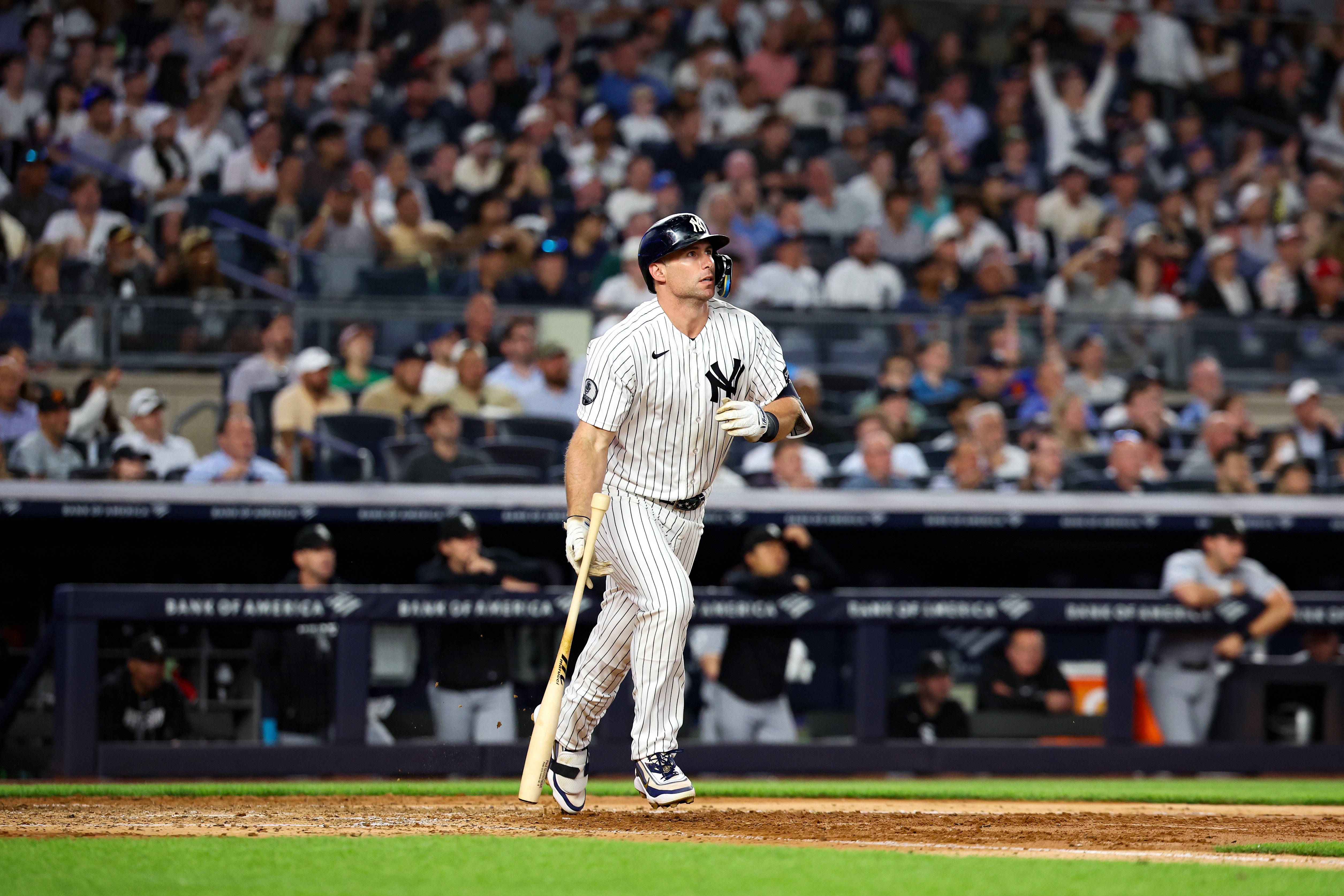
Being 38 takes a different toll on the body than at 28, especially in terms of rest and recovery. Players often say the only day they feel 100% is the first day of Spring Training. That’s well into the rearview mirror at this point for all players, where bumps and bruises take a cumulative toll.
Yankees infielder/outfielder José Caballero recently offered an honest self-inventory of his physical state before a game at Fenway Park, moving gingerly toward the dugout and remarking that he only felt “good enough.” Now imagine adding another decade to that wear and tear.
Goldschmidt is living that reality, but it makes him enjoy and appreciate the payoff even more.
“In times when you’re younger, something good happens and you’re like, ‘Oh, that’s what I’m supposed to do,’” Goldschmidt says. “And there is a truth to that. But I think understanding how hard this game is, it’s OK to enjoy the wins and the hits, whatever they may be.”
That’s why, day after day, Goldschmidt keeps making the drive to the Bronx, showing up two hours earlier than required to put in the work. Sometimes, he thinks about when he was a kid growing up in Texas, wondering if he’d ever get the chance to walk on a big league field -- much less play on one.
Now his family photo album is packed with images of his wife, Amy, and their children at nearly every stadium throughout the Majors.
“I want those memories, too,” Goldschmidt says.
He still craves the big October moment. He will occasionally allow himself to fantasize about making the pivotal swing that sends the Yankees parading up the Canyon of Heroes. As he says, “That’s what we all play for at every level. And this team has a chance to do it.”
But he also notices the smaller things: his son stumbling near the warning track in center field, attempting to settle under a batting-practice fly ball that seemed to go a mile high. His daughter walking through the dugout, grabbing a couple pieces of Dubble Bubble from the players’ stash. Teammates born more than a decade after him calling him “Young Goldy,” even on days when he feels anything but.
“I don’t forget how special it is to put on a Major League uniform and to get to be in this clubhouse and on these fields,” Goldschmidt says. “It’s a great blessing every day. I’ve tried to never take it for granted.”
Goldschmidt knows this won’t last forever. That’s why it matters so much now.
Bryan Hoch is a contributing writer for Yankees Magazine. This story appears in the August 2026 edition. Get more articles like this delivered to your doorstep by purchasing a subscription to Yankees Magazine at www.yankees.com/publications.